Showing posts with label time. Show all posts

Sunday, March 11, 2018

Back into September light

September shadows return tomorrow.

March lettuce, started in the fall

The grackles, my favorite bird, are back, strutting around like they own the place, giving me the yellow eye, tossing over sticks and leaves and clam shells, eating pretty much anything that moves.

A lone crocus flower opened up for business, ready for any late winter bee foolish enough to wander out on this chilly, windy day.

Crocus!

I found the lettuce pushing up on the cold frame window. I may leave the frames open now, answering the prayers of the rabbits readying their nests for bunnies.

A March garden dinner sounds like peasant fare--kale, Egyptian walking onion, rosemary, various lettuces from the garden, bread and potatoes from Acme.

The first peas are tucked in the earth now, a week early, despite the nor'easter threatening to hit in two days. I have plenty more to plant.


As you get older, you realize you have far more seeds than you do time. 


Daylight Saving Time, again....

An hour shorter makes for a longer week... 

"...[T]he shift to Daylight Saving Time (DST) results in a dramatic increase in cyberloafing behavior at the national level."
DT Wagner et al, J Appl Psychol. 2012 Sep;97(5):1068-76

A quarter of the world's population will be groggy tomorrow. A few people will die traumatically. Students' test skills will deteriorate. A few more people will die of heart attacks. The stock market may crash.

And yet we still do it.

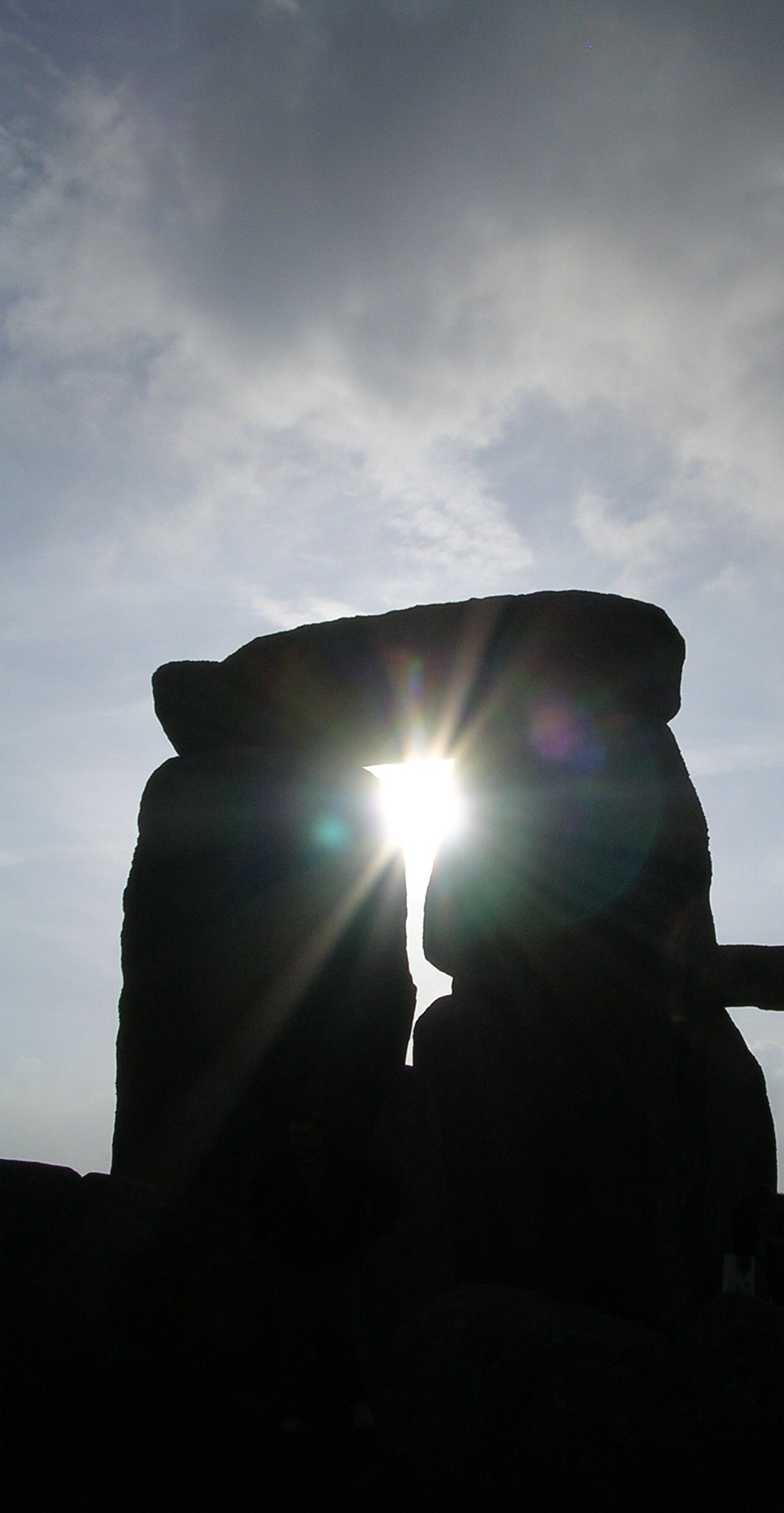
Stonehenge time
You cannot save time.

You cannot add an hour of sunshine to your day.

You can, though, manipulate human conceits. If nothing else, Daylight Saving Time is an excellent way to demonstrate to children the folly and the real consequences of humans believing they control more than they control.

Tomorrow my 1st period lambs will trudge through before dawn through blackened banks of snow to get to school. Broad Street in Bloomfield will look like the zombie apocalypse. We'll tell them to keep their heads up (or at least wipe the drool of their desks before they leave), but we are bucking millions of years of evolution.

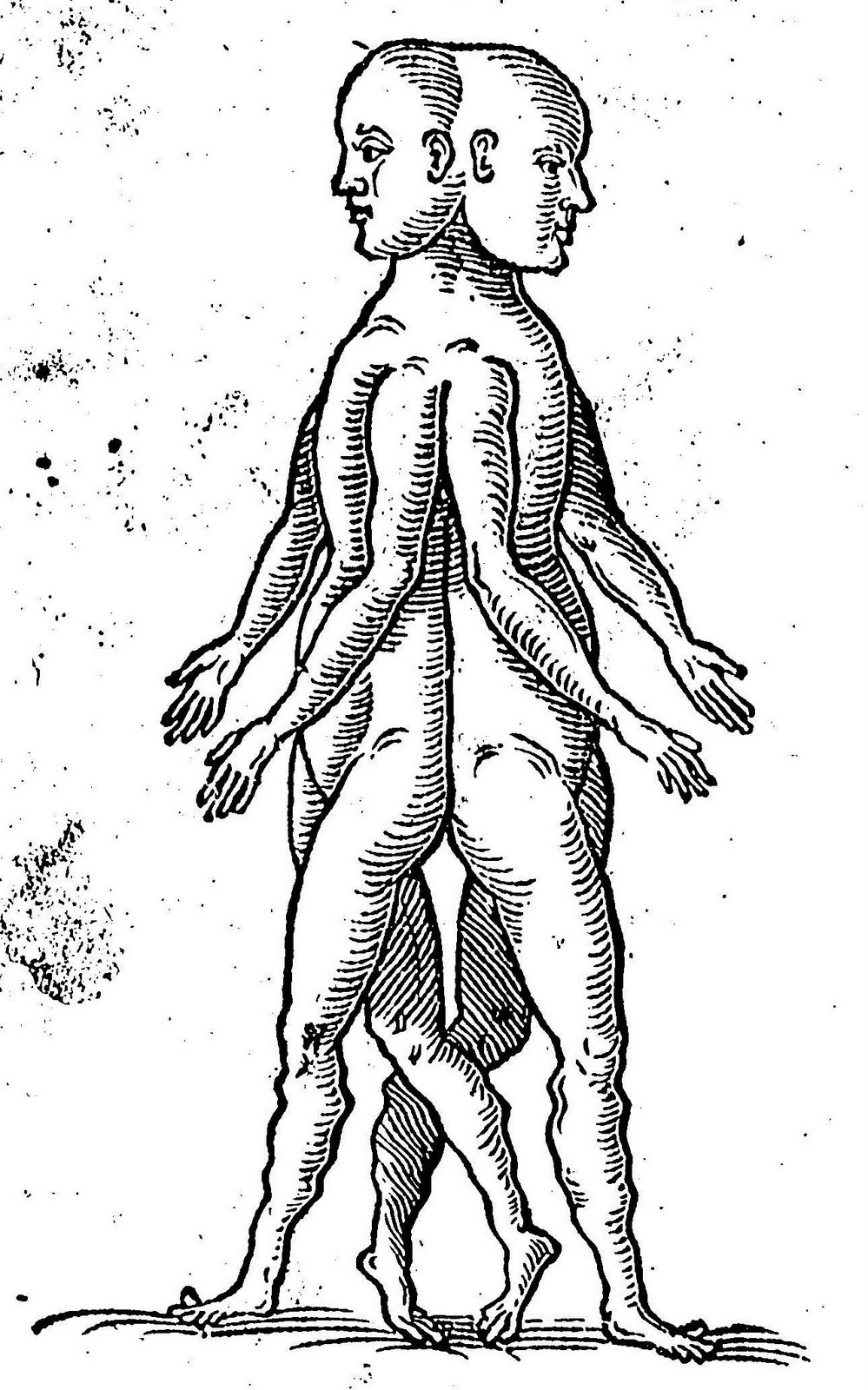
Photo by Eugene Ter-Avakyan, cc-2.0

Humans need sleep. Adolescents (still considered by most to be humans) need more than the 97 minutes my kids average on Sunday nights.

And why not? What better way to prep for college and career readiness in the global economy than making students take life-altering assessments while comatose? Have kids knock down a few Xanax pills, and chase it with gin and Adderall cocktails to make it really authentic.


Stonehenge photo by Resk, released to PD

Yep, a repeat--I ilke cycles....

Sunday, December 31, 2017

New Year's Eve

A couple of year's ago on New Year's eve.
Closest thing I come to resolutions these days.


I watched the sun as it set yesterday.
I watched the sun as it rose again this morning.

I don't do this often enough, few of us do.

Just a few minutes after the sun broke through this morning, a twitchy squirrel sat on top of a fence post, still, facing the sun, then resumed his twitchiness.

A vulture flew within 20 feet of me, its under feathers reflecting the sunlight as it banked.

I just watched.
It would have happened anyway.
And it's happening anyway.


And it will keep on happening....

Sunday, November 5, 2017

EDT cannot save us

A yearly reminder....


Yesterday the sun hung in the sky for 10 hours and 25 minutes in these parts.
Today the sun cheats us out of two minutes, only hanging around for 10 hours and 23 minutes.

Way I figure it, I lost two minutes of Ra time as he travels on his night-barque. 
The eggplants, now barren, cast long November shadows as the world dims.

What possible hour do we think we wrought last night?


If I must chose betwen the sun and hubris, I choose the sun.

Sunday, November 6, 2016

Time (and time again)

We keep time in class, as we do pretty much everywhere. I've got several analog clocks and one less precise (and less useful) box of digital time.


We pretend that days are exactly 24 hours long, and that each hour is as well proscribed and linear as the next. This is not true, and will not be for millions of years.

Kids know otherwise instinctively, of course, at least until we train educate them.

An hour in December lasts exactly as long as an hour in June these days, but that was not always true. Hours were invented by a mammal that paid attention--daylight was divided into 12 portions, with noon defined as when the sun was at its highest point for the day.

Last hour of the day
We started school here in Bloomfield in September--the daylight hours shrink dramatically this time of year.  We had over 12 hours of sunlight the first day of school. Tomorrow we will have just minutes more than 10 hours.

The sunlight we do get have is more oblique and less intense, long shadows and less light. We pretend our hours are equitable throughout the year.

Science teachers will make a big deal about this, explaining the seasons using globes and lamps, but if we've taught our children that sunlight does not matter, that the clock matters more than your hypothalamus, that we eat at noon, not when you're hungry, well, then, we should stop feigning shock when children really don't pay much attention to sunlight.

None of the adults around them do, either.

A clock in front of our library, from NJ State Library Photo Collection

If college graduates do not know why seasons happen, or how trees accumulate mass, or what forces act on a basketball in flight, maybe it's not because our children refuse to learn.

Maybe it's because they internalized what we've been teaching them all along....


Yes, another cyclical post--I love the rhythms of life.

Sunday, March 8, 2015

Because Daylight Saving Time

A day an hour shorter makes for a longer week... 

"...[T]he shift to Daylight Saving Time (DST) results in a dramatic increase in cyberloafing behavior at the national level."
DT Wagner et al, J Appl Psychol. 2012 Sep;97(5):1068-76

A quarter of the world's population will be groggy tomorrow. A few people will die traumatically. Students' test skills will deteriorate. A few more people will die of heart attacks. The stock market may crash.

And yet we still do it.

Stonehenge time
You cannot save time.

You cannot add an hour of sunshine to your day.

You can, though, manipulate human conceits. If nothing else, Daylight Savings Time is an excellent way to demonstrate to children the folly and the real consequences of humans believing they control more than they control.
***

Tomorrow my 1st period lambs will trudge through before dawn through blackened banks of snow to get to school. Broad Street in Bloomfield will look like the zombie apocalypse. We'll tell them to keep their heads up (or at least wipe the drool of their desks before they leave), but we are bucking millions of years of evolution.

Photo by Eugene Ter-Avakyan, cc-2.0

Humans need sleep. Adolescents (still considered by most to be a subset of humans) need more than the 97 minutes my kids average on Sunday nights.

And why not? What better way to prep for college and career readiness in the global economy than making students take life-altering assessments while comatose? Have kids knock down a few Xanax pills, and chase it with gin and Adderall cocktails to make it really authentic.

Arne says: "Students exist To Serve Man"


Stonehenge photo by Resk, released to PD
Yep, a repeat--I ilke cycles....

Thursday, January 1, 2015

Waiting for the perihelion


January 1st is an odd day to start a new year. While the importance of time is a human conceit,its divisions are based on the natural world, a world too few see anymore.

Every night the starry sky shifts about a degree. (Degree is another word losing its meaning when few folks play with tangents and secants--we have machines have all the fun nowadays.)

In about a year's time, our closest star returns to where we last left it 365 days ago.

The Earth's rotation is (on average) slowing down while humans keep speeding up. A day used to be exactly 86,400 seconds, and still is, so long as you define seconds as 1/86400 of the time it takes the Earth to make a complete rotation (relative to the sun's position in our sky).

With atomic time, a second as defined today will be the same length as a second defined a billion years from now. How long will a day be then?

Depends--if we keep the astronomical definition, a day will still be 86,400 seconds. If the Earth is slowing down enough to add about an average of a 20 millionths of a second to a day each year, then we'll have over 5 more hours to get a days work done in a billion years.


In just three days, Earth will be as close to the sun as it gets in a year. This is a big deal (to three or four of us, anyway). Why not slide the new year to something of more import than some Roman two-faced god? Better yet, why not slide it back 10 days to the winter solstice, when our unconquerable sun starts its return journey to its place high in the sky?


Sunday, March 9, 2014

Dawn of the Dead

An hour shorter makes for a longer week... 


"...[T]he shift to Daylight Saving Time (DST) results in a dramatic increase in cyberloafing behavior at the national level."
DT Wagner et al, J Appl Psychol. 2012 Sep;97(5):1068-76

A quarter of the world's population will be groggy tomorrow. A few people will die traumatically. Students' test skills will deteriorate. A few more people will die of heart attacks. The stock market may crash.

And yet we still do it.

Stonehenge time
You cannot save time.

You cannot add an hour of sunshine to your day.

You can, though, manipulate human conceits. If nothing else, Daylight Savings Time is an excellent way to demonstrate to children the folly and the real consequences of humans believing they control more than they control.
***

Tomorrow my 1st period lambs will trudge through before dawn through blackened banks of snow to get to school. Broad Street in Bloomfield will look like the zombie apocalypse. We'll tell them to keep their heads up (or at least wipe the drool of their desks before they leave), but we are bucking millions of years of evolution.

Photo by Eugene Ter-Avakyan, cc-2.0

Humans need sleep. Adolescents (still considered by most to be a subset of humans) need more than the 97 minutes my kids average on Sunday nights.

It could be worse, though--in Illinois, state officials have perused the current scientific literature on sleep and concluded that groggy zombies trudging through post-apocalyptic grimy snowbanks should take their statewide tests  (ISATs).

Arne says: "Students exist To Serve Man"

And why not? What better way to prep for college and career readiness in the global economy than making students take life-altering assessments while comatose? Have kids knock down a few Xanax pills, and chase it with gin and Adderall cocktails to make it really authentic.


Stonehenge photo by Resk, released to PD

Sunday, March 10, 2013

Daylight Ravings Time: Ra Ra Ra!


Yesterday the sun hung in the sky for 11 hours and 39 minutes in these parts.
Today the sun graces us with three more minutes, lounging around for 11 hours and 42 minutes.

Way I figure it, I gained minutes of Ra time as he travels on his night-barque. 
The eggplants, now just seeds put together with last summer's light, sit patiently in little envelopes, about to be born again, to do this thing we and all living things do.

It's in our shared DNA, our shared ribosomes, our shared glycolysis, putting things together, then breaking them down again.

The sun makes this possible .

What possible hour do we think we lost last night?
What hubris allows us to believe we can break time from its essence, our link to the sun and the stars?


If I must chose betwen the sun and hubris, I choose the sun.

Wednesday, December 21, 2011

12:30 A.M

Yep, the annual winter solstice news--the tinge of sadness I felt late June now reflects back as a tige of joy.
The sun is dead. Long live the sun.


12:30 A.M. tonight the sun will stand still for an instant, shift its mass*, and head back north.

6 months ago, when we sat on the opposite side of the sun, I celebrated the summer solstice, a joy tinged with the weight of knowing the sun would start its slow, long course southward.

Winter is just beginning, and winters can be brutal here. The light, however is returning.

When I was a child, winter meant cold, summer heat. I did not, could not, grasp why the elders got so excited late December, at the cusp of winter, when we faced long wintry days.

I get it now.
***

I stood outside last night in the chill with my youngest, now a quarter century old, watching our shadow drift across the moon, a wavering copper-gold washing in from the moon's left.

My mom used to tell me she could see me as an infant even as I stood before her as a man. I laughed, of course. I am big--over 200# big.

I get it now.
***

I still give tests, more out of habit than sense now. Performance on science tests a few days before the Christmas break follow a predictable pattern, and my students did not fail to fail.

We do a lot of things because we do them. If mastery's the goal, then a class average of low 70's with a bell-shaped curve, a science teacher's dream a generation ago, marks my failure.

On my board today two-foot numbers announced the time of the solstice--12:30 A.M. Solstice literally means the sun stands still.

Very few students notice how far the sun has shifted since class started just 3 1/2 months ago. There's no need. Food comes in boxes, heat in radiators. The whole world of technique is magic to them.

In Ireland this morning, the sun rose, as it has, as it will. A shaft of sunlight flashed through a chamber in Newgrange built thousands of years ago, before the Great Pyramids, before the Celts arrived, before Stone Henge.

We will not study this in science, nor will our students study this in history class. We will create a class ready for the 21st century, for the abstract, for a culture that confuses bank profits with economy.
***

If children owned the winter solstice, the dying light, knowing what waits for each of us before a 100 winter solstices pass, would they come to school?

Would you?

I believe schools can be worth the time children invest in them. I am not convinced we're there yet.

At least not as long as I keep practicing education as religion, using a script written generations before me.


*The sun may indeed change direction if we use Earth as the reference point, but "shifted its mass" is, of course, incorrect, since it implies uneven forces were applied to it. Since I have yet to find a better explanation for "mass" beyond "the amount of inertia stuff has," even a poetic license does not give me permission to spew such nonsense.


Sunday, November 6, 2011

What hour?


Yesterday the sun hung in the sky for 10 hours and 24 minutes in these parts.
Today the sun cheats us out of two minutes, only hanging around for 10 hours and 22 minutes.

Way I figure it, I lost two minutes of Ra time as he travels on his night-barque. 
The eggplants, now barren, cast long November shadows as the world dims.

What possible hour do we think we wrought last night?


If I must chose betwen the sun and hubris, I choose the sun.

Thursday, September 1, 2011

Zeitgeber matters

We keep time in class, as we do pretty much everywhere. We pretend that days are exactly 24 hours long, and that each hour is as well proscribed and linear as he next. An hour in December lasts exactly as long as an hour in June.

Kids know otherwise, of course, at least until we train them.

We start school here in Bloomfield next week. The daylight hours shrink dramatically this time of year. A week from now we'll have almost 20 minutes less daylight than we'll have today. In a month, we'll have an hour and 20 minutes more darkness. The light we do get will be more oblique, less intense.

Science teachers will make a big deal about this, explaining the seasons using globes and lamps, but if we've taught our children that sunlight does not matter, that the clock matters more than your hypothalamus, that we eat at noon, not when you're hungry, well, then, we should stop feigning shock when children really don't pay much attention to sunlight.

None of the adults around them do, either.

If college graduates do not know why seasons happen, or how trees accumulate mass, or what forces act on a basketball in flight, maybe it's not because our children refuse to learn.

Maybe it's because they internalized what we've been teaching them all along....


New leaf--if more than a few children are truly uninterested in a topic, and I have no good reason to push them, drop the topic.

Wednesday, August 24, 2011

A Clockwork Yellow

If you want to make an apple pie from scratch, you must first create the universe.
Carl Sagan

I think clocks did as much to squash our spirits as anything else, but the history of time is fascinating, and surprisingly silent given its effects on our culture.

When the Prague Orloj astronomical clock was built, raw materials needed to be churned into the metal parts used to make the massive machine, some of which still exist today. People go to visit it, to take pictures, to, in a word, worship.

The beauty of the rhythm of the universe marked by the clock has been usurped by the idea of the clock itself. An abstract form that takes the concrete form of the clock has become another idol.

And we love idols.
***

What do we value in science classes? What does a child learn about the universe by Skyping with astronauts, by playing with remote telescopes via the internet, by doing simulations of labs on an iPad?

If a teacher does not have the wherewithal to teach about combustion using nothing more than a candle, a match, and a bell jar, an iPad will not help.

Teaching science simply can be stressful--there is simply no place to hide. I can teach about combustion using a chemical equation, balancing the reactants and products with flair, as though that's the point of chemistry, using animated demos to show various colorful molecules combining and breaking to form various new substances. And I used to do just that.

Now I start with water seemingly cast from a lit propane torch.

Which is the point, really--here is a piece of the universe, child, here's what we see. Let's figure out if we can find a pattern here.

Teaching combustion going to the equations first is like teaching someone how to look at a sunflower by analyzing Fibonacci spirals:


Until a child sees the beauty of the sunflower for itself, its powerful symmetry easily seen but not so easily defined without numbers, no sense pushing golden ratios.

The school awards the children who can manipulate the Fibonacci ratio. It's easily tested, and easily mastered even without seeing the symmetry in a flower head, should a child be so motivated. In school, we idolize the abstract.

A child could know the golden ratio without grasping the beauty seen in nature's symmetry, and do just fine in science class.

And so folks go to gawk at a clock in Europe, designed to reveal patterns discovered by humans hundreds of years ago, taking pictures of a machine with little machines, understanding how neither works, nor caring to. And they will show off their photos as we show off our clever students who spout off ratios, and wonder why we feel an ache in our chest as we drift to sleep, feeling that something is not quite right, that something is missing.


I keep a sundial by my classroom window.


Golden ratio image lifted from Sofluid here.
The sunflower is by lucapost released and borrowed under CC via Flickr.
Prague clock by Hector Zenil, via Wikipedia, used under CC.

Monday, August 23, 2010

On idleness

School beckons--this is a repeat from a couple of Augusts ago, a reminder to me.


Idleness is the enemy of the soul. And therefore, at fixed times, the brothers ought to be occupied in manual labor; and again, at fixed times, in sacred reading. ... there shall certainly be appointed one or two elders, who shall go round the monastery at the hours in which the brothers are engaged in reading, and see to it that no troublesome brother chance to be found who is open to idleness and trifling....

The Rule of St. Benedict, ca. 530, Medieval Sourcebook


Discussions of the soul in any context can be dicey, and discussing it as a science teacher in a public school could be grounds for dismissal, understandably so.

(I suppose could wander to the chasm's edge by asking if there's any empirical evidence supporting the myth that a soul weighs 21 grams, but I best save that for college sophomores in a coffee shop chat.)


This post is not about souls.
It's about idleness.

Science requires reflection: "free" time, wandering thoughts, curiosity.

Reflection does not, of course, always lead to science, but I'd wager that the Benedictine order recognized it could lead to bigger problems than hirsute palms and astigmatism. Free time, wandering thoughts, and curiosity can be just as disastrous in a classroom of humans metamorphosing into their adult forms.

Teaching content to a docile audience is easy. Here's the curriculum, here's the test. Do well often enough, and you will be successful.

A huge chunk of the Teaching for Dummies section at Barnes and Noble is dedicated to tips on inducing docility in students. /me waves to Mr. Wong. And I've eagerly read just about all of them.

Some of us are coarse enough to articulate the threat:

You need your diploma to get a job so you don't starve.
(Make sure you sneer contemptuously when you spit this out,
and make sure you don't add voice to its silent ending "...you ungrateful bastards.")


The bell rings. 48 minutes later, it will ring again. Little time for idleness.

I'm the elder in the classroom. I scan for idleness and trifling. There's not a whole lot of wiggle room.

Still, if one of my students (substitute "wackadoodle" for "troublesome brother") should happen to stumble on a spark that threatens order, a spark that has a real chance at lighting a relevant fire in the classroom, I've got a canister of propane sitting on the desk.


The picture on the bottom left is from the New York Times, which did, indeed, tackle science and the soul.

And I blame the Benedictines for a huge chunk of toaday's problems--they turned time into a commodity.

Sunday, August 1, 2010

Lammas again

Yep, same as last year--I like the rhythm of the year.


The sunlight diminishes perceptibly now. The plants know.

The past week we've eaten deep purple eggplants and bright pink brandywine tomatoes, yellow summer squash and green-and-red striped beans. Today we will pick basil for pesto, some for tonight, some for February. A bowl full of ripe blueberries waits for us, sunlight incarnate.

But the sunlight is dying, and the plants know.

We do not speak of religion in class, at least not formally, though students will occasionally ask religious questions, and I will deflect them. I explain that some things cannot be known through science, and that what I believe beyond the limits of science falls outside the province of class.

In class we talk of light and hormones, photoperiods and abscisic acids, to explain how plants know. We talk under the hum of fluorescent lights, time marked by defined blocks of time. In class, September light is exactly the same as February light, and class is always 48 minutes long, no matter where the sun sits.

Sunset today marks the start of Lammas, or Loaf Mass Day--joy for the harvests that are coming and regret for waning sunlight. Lammas used to be celebrated--the first wheat berries of the year were ground into flour and baked into bread offered in thanks, some used for Communion, some for the feast that followed.

We thank God (or Tailtiu or Lugh or some other forgotten gods)--harvest time reflects death and grace, whatever the culture. Death and grace feel foreign in the classroom, indeed foreign in our culture. We pretend, at our peril, that life is linear.

Lammas falls halfway between the summer solstice and the autumnal equinox. The days are shortening, winter is coming. Until you feel the seasons in your bones, until you follow a grain of wheat from the ground to plant to bread to you then back to the ground again, the modern myths may be enough.

Science can explain why plants produce fruit when they do, and I can teach the steps. We can test whether a student learns what I present, and the students that do this best have access to all our culture offers.

You can become very powerful, very rich, without knowing grace. You can go far in life if blessed with intelligence and beauty, degrees and citations, without ever knowing what a wheat berry looks like, without ever kneading a lump of flour and water and yeast into glistening dough.

In the end, we don't know much, and may never know much. We can, however, recognize grace. We might not grasp it rationally, but we we can grasp it--a good reason to celebrate Lammas.


The Skeleton of Death dances every hour in Prague--photo of the Prague Astronomical Clock by Sandy Smith found on VirtualTourist.

Thursday, December 24, 2009

A secondhand second hand


High schools are ruled by bells, or rather, a variety of tones still called "bells."

In many classes, students jump out of their seats at the sound of the bell, eager to accomplish the many tasks adolescents perform between classes--flossing their teeth, calisthenics, philosophical study--whatever it is that students do before they saunter into their next class 5 minutes later.

In other classes, such as mine, students sit until they get their Pavlovian clue (Mondays through Thursdays--"have a great day" and on Friday, "What do we practice?" Safe Science!)


I have an ancient analog clock in my classroom, just a few feet from, the digital school-issued one. My clock has a second hand. I can tell when the bell is going to ring. I often count down.

Like many older clocks, my clock has not been scrubbed of error. A few seconds off each day adds up over weeks and months. No big deal, there's a little knob in the back for correction.

The state-prescribed science curriculum is sometimes boring (*gasp*), and I've gotten pretty good at spotting texting, so my clock becomes, at times, an object of inordinate interest.

Once a child becomes familiar with the second hand, the interminably long last minute becomes slightly less so.

The second hand creeps to the appointed dismissal moment--and nothing happens. The bell rings a few seconds later than expected.

"Hey, the school clock is wrong!"

And we are now set for a lesson in relativity.

The school clock, being the arbiter of school time, cannot be wrong. And I know my old clock has picked up a step or two over its digital cousin.

The school clock cannot be modified by me--somewhere in administration someone has the task of keeping time, but given computers and quartz, it might be decades before anyone has to make an adjustment.

I frequently adjust mine, even when it's fine. Just enough to make the second hand change in relation to the school bells.

Evil? Not sure. Sneaky? You bet. But my kids are watching it, and commenting, and thinking. They inadvertently form hypotheses, most of which assume my clock is as accurate as the NIST official US time.

Some days I spend 47 minutes teaching pseudoscience, teaching vocabulary or models as gospel. During the last minute, the kids get the real science, watching an ancient clock's wobbly second hand tick towards their predictions for the bell. I listen to the side conversations but do not interrupt.

"Geez, the bell was early! Dr. D, how come the school can't get its clocks straight?"

I shrug. They'll figure it out sooner or later.

Monday, March 9, 2009

Time out!

Leslie suggests, wisely I think, that I keep my vaccine opinions to myself.
My signal-to-noise ratio got knocked down a bit this month.
I am a teacher, no more, and, of course, no less.


Studies suggest that this disconnect between body time and clock time can result in restlessness, sleep disruption and shorter sleep duration. Other studies have suggested links between time change and increases in heart attacks, suicides and accidents, though scientists say more study is needed.

New York Times
March 10, 2009
But we do it anyway....

Blame the European monks--living by the clock is a very recent development. Before mechanical devices, we relied on the sun, the moon, the seasons. The monks regularly prayed together. Ironically, modern time-keeping has pulverized free time. Who has the time to pray anymore?

I do not have a watch or have a cell phone. Not a digital bone in my body. I am amazed that some people are amazed by that--we are surrounded by clocks.

I usually wake up a few minutes before the alarm goes off at 5:30 AM. Today I got jolted. I do not adapt well to folks screwing around with my clocks. Still, worse things can happen.

About 350 years ago, the British finally succumbed to the Catholic version of the calendar--despite its papal origin, the Gregorian calendar works better than the Julian. The Julian calendar adds about a day every 131 years--and this adds up.

As part of the changeover, September 2, 1752, became September 14th. The whole year was about 20% shorter than other years because of its late start (March 25) and the missing chunk of September.

Imagine if Rush Limbaugh controlled the pamphlet market back then.

So we "lost" an hour. We'll get it back in the fall.

And really, nothing happened. The mourning dove still called out as it does at dawn, the crocuses opened up as the sun rose, a few mayflies hatched out by the pond early this afternoon.

I got to walk in the dark to school, cranky and tired and feeling a little less superior than the sparrows who slept as they always do, guided by the sun.

A few of us will suffer heart attacks this week because of our addiction to artificial time. And you thought fluoride and milk were dangerous....