Showing posts with label education reform. Show all posts

Sunday, March 9, 2014

Dawn of the Dead

An hour shorter makes for a longer week... 


"...[T]he shift to Daylight Saving Time (DST) results in a dramatic increase in cyberloafing behavior at the national level."
DT Wagner et al, J Appl Psychol. 2012 Sep;97(5):1068-76

A quarter of the world's population will be groggy tomorrow. A few people will die traumatically. Students' test skills will deteriorate. A few more people will die of heart attacks. The stock market may crash.

And yet we still do it.

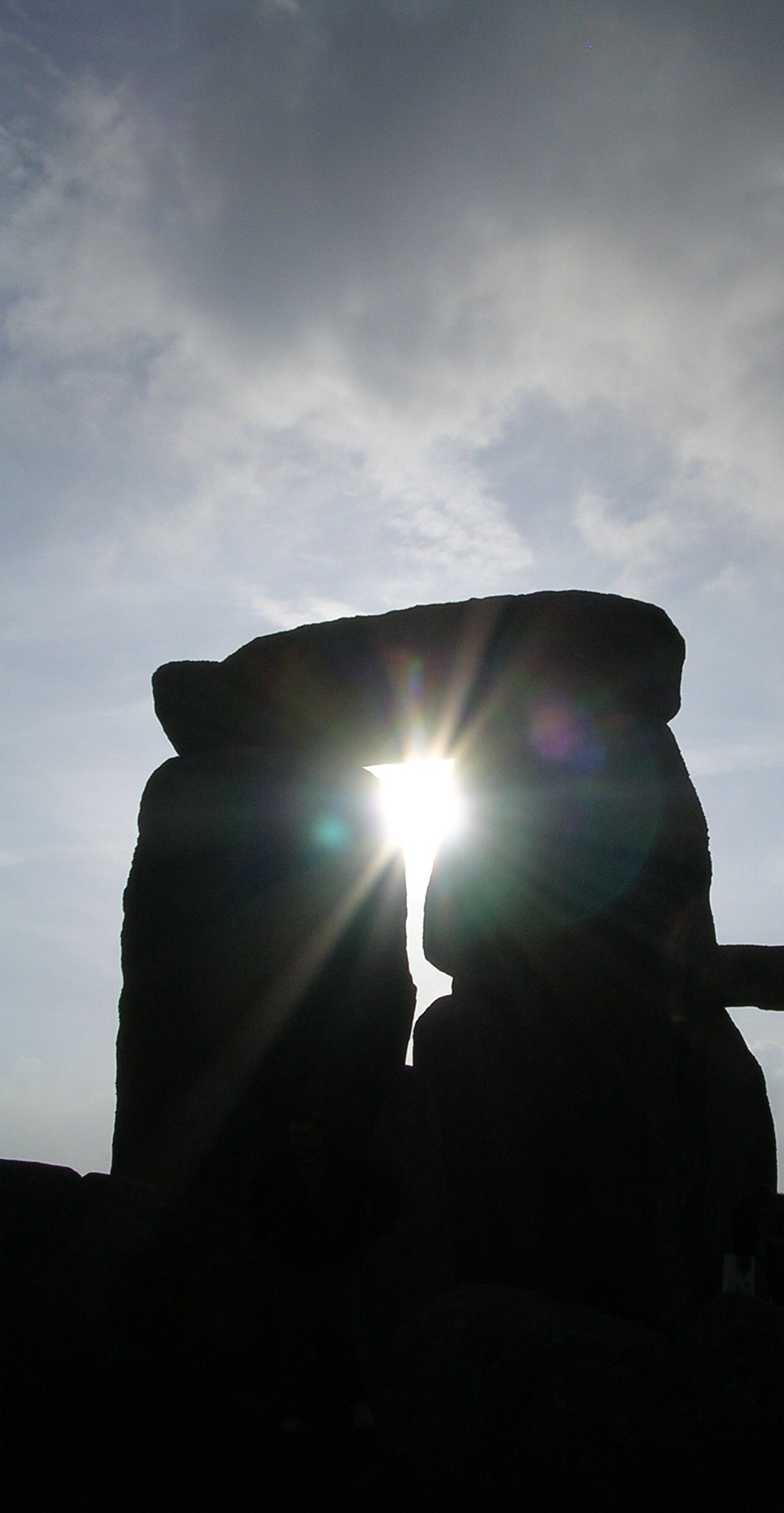
Stonehenge time
You cannot save time.

You cannot add an hour of sunshine to your day.

You can, though, manipulate human conceits. If nothing else, Daylight Savings Time is an excellent way to demonstrate to children the folly and the real consequences of humans believing they control more than they control.
***

Tomorrow my 1st period lambs will trudge through before dawn through blackened banks of snow to get to school. Broad Street in Bloomfield will look like the zombie apocalypse. We'll tell them to keep their heads up (or at least wipe the drool of their desks before they leave), but we are bucking millions of years of evolution.

Photo by Eugene Ter-Avakyan, cc-2.0

Humans need sleep. Adolescents (still considered by most to be a subset of humans) need more than the 97 minutes my kids average on Sunday nights.

It could be worse, though--in Illinois, state officials have perused the current scientific literature on sleep and concluded that groggy zombies trudging through post-apocalyptic grimy snowbanks should take their statewide tests  (ISATs).

Arne says: "Students exist To Serve Man"

And why not? What better way to prep for college and career readiness in the global economy than making students take life-altering assessments while comatose? Have kids knock down a few Xanax pills, and chase it with gin and Adderall cocktails to make it really authentic.


Stonehenge photo by Resk, released to PD

Saturday, January 26, 2013

A cautionary tale


 This originally was written in January, 2009--nothing has changed.
Got a little help from Clay Burrell, too.


Prince Arne declared himself the Learner. He decreed all children shall become learners, too.

And the people rejoiced!

"We must incentivize schools to learn them everything!"

So the children were taught this and the children were taught that, then that, and some more of this. This and that and that and this.

And the children took the Pearson and Gates National This and That Learner test and...gasp...most of them failed!

Prince Arne thought and thought--why he knew a "this." And he knew a "that." He thought and thought and thought some more.

Towers fell, and poppies grew, but Prince Arne continued his thinking of this and of that.

"We shall teach them more this and thats! We will raise this this bar and that that bar, and they will pass!"

And the people rejoiced.

And now the children did double this and double that. They called a this a triple this that, and a that a triple that this! Oh, they learned and learned and learned some more!

The children then took the International National This and That Learner Exam, upgraded and revised and validated at much expense and stamped with the Official Seal of Pearson.

And they failed again--except in the district of Here and There.


"Oh, Super Supers of the Here and There, how did you do it?"
the people asked.

We dipped them in lard, had them stand on their heads,
Made them study real hard, fed them bennies and reds,
We stapled and folded and creased without end
Our methods are valid, we've got proof can defend

The key to success is to put Thissing First
And now our children are no longer the worst.
We are the Miracle in Houston, the success in Chicago
We even topped scores of some school in Wells Fargo.


(But hear's the real sekrit, come listen and learn
We gave them the answers, left no test unturned
If the test is the point, why bother with facts
We gave them the keys, our students relaxed

We give each a scantron, the dots clearly bubbled
Then they filled out another, completely untroubled
Using authentic skills learned in the finest of schools
Now the students are ready to be corporate tools.)

So each district bought the Thissing First program, a billion dollars was spent. The kids were drugged and dipped in lard and forced to study without end the thisses and thats and the thats and the thisses.

A month before the Interplanetary Universal This and That Plus Learner Exam, upgraded and revised and validated at great expense and stamped with the Official Seal of the Universe, each child meticulously bubbled their own individualized scantron--some used crayons, some Play Doh, some used ink, and a few traditionalists still fumbled with Dixon Oriole Number 2 pencils. The people were pleased to see that the new education recognized different learning styles.

And every child passed (except a few in Gotham who refused to play) but that's OK, because "all" means 97%.

And the people rejoiced.
The End


Scantron image from Greene County Public Library.

Thursday, July 26, 2012

What do you care to know about the world?

Teaching matters.
We owe it to our children to get it right.


 What do you care to know about the world?
There's a place for what used to be called boredom, for empty spaces to slide into your mind. It's not particularly unpleasant, but it lacks the dopamine we've programmed our children, ourselves, to crave.

If you sit still long enough outside, you will see things, hear things, smell wondrous things you hardly knew existed. But you need to sit still. Without music, without a screen.  Close your eyes and listen. Sniff. Touch the earth.

We train our children to believe that we have mastered our universe. We teach them how to avert their eyes. We answer their simplest questions ("Why are people poor?") with You're too young to understand...It's complicated...It will make sense when you're older. We actively work to make our children jaded.

Science teachers, like art teachers, have an obligation to teach children how to seek what's true, if we hope to teach them anything at all. We cannot tell them.

Has any young child not been charmed by the edge of a July pond, or by a tray of watercolor paint? Both teem with countless possibilities that cannot be measured or tested. We cede control when we hand a child a paintbrush, a magnifying glass, a few moments of unstructured time.

Before you dare restructure the world of a child--the heart of teaching--dare to ask yourself what do you care to know about this world? If you do not yet know, get out of the classroom until you do.


What do you care to know about the world?
I have stared into the eyes of animals as millions of my triceps muscle cells release calcium ions, triggering almost simultaneous contraction, driving the club between the eyes of the critter I am slaying.

It remains an awful moment for me, that last instant.

Awful comes from agheful, "worthy of respect or fear," full of awe, full of fear, a word now reduced to meaning "very bad." We've long lost our sense of awe, at least those running the show now--if we had it, we'd not destroy the world mindlessly.

Yet when I mindfully take a life, so that I may eat, I slide into a rich universe devoid of words, but not of feelings, in the most basic sense of the word--the rhythmic writhing flesh in my hands now quivers chaotically, if the blow is true.

Yet to do so in a classroom would be obscene, an affront to our children, an act of career suicide, and (*gasp*) a deviation from our lesson plans,. with every minute programmed to match a standard designed by folks who long ago lost touch with what matters.


What do you care to know about the world ?
As fundamental as this is, that we are here on a planet, inextricably linked to each other and to everything else alive, and to many things not, many of us live in worlds that are but shells of the fundamental one held up by the ground.

Just like the earthworm, we eat, we breathe, we toss shite from our backside, we entangle together to share genetic memories we pass on to new life, and we die. We're of the earth, and for those who believe that this is but a tiny journey to bide time until another world finds them, may earthy joy find you before your last breath.


And you will draw a last, agonal breath from this world, the only one we can know, the world of art, of science, of writhing life, of decay, of dirt, of us.

The world worth knowing...


Watercolor tray from Officemax site here.
Other photos ours, usual CC applies.

Sunday, May 20, 2012

What we risk losing

Turning and turning in the widening gyre
The falcon cannot hear the falconer;
Things fall apart; the centre cannot hold;
Mere anarchy is loosed upon the world,
The blood-dimmed tide is loosed, and everywhere
The ceremony of innocence is drowned;
The best lack all conviction, while the worst
Are full of passionate intensity.


I watched a grackle along the edge of our ocean yesterday.

It gallumphed down the surf's edge like a drunken sandpiper, got smacked with a wave, then fluttered back to the top of the now receding wave.

Over and over again.

I sat on the sand with Leslie, and we chatted about our grackle as it battled the wash. I love grackles, hands down my favorite bird, and this one was being particularly grackly. What would possess a bird to challenge the edge of the sea?

After a few minutes, the grackle answered my question--it nabbed a writhing sand crab, then picked it apart a few feet away. The grackle got its reward, and we got our story.
The sand crab did not fare as well.
***

There is a risk challenging those who hope to transform public education into data farms feeding the intricate morass we still call economics. 


Look at the humorless smiles of those running the show, the lupine grins of Arne Duncan, of Bill Gates, of Eli Broad. They may even believe what they are spewing--it takes a certain lack of humor to get to reign over the destruction of things that matter.

They can hurt you, and will if you pose a threat to their goals.

But that's not the risk I am talking about. As much fun as it is to pretend otherwise, a few words shared among a very small community of teachers poses no threat at all to the ed "reformers" who value power over democracy.
  • The risk is falling into their language, into their world, into their ethos. 
  • The risk is spending too many hours poring over their dull documents (Next Generation Science Standards, anyone?), trying to parse out meaning of individual phrases when we should be calling out the process that created such a document.
  • The risk is weighing an offer to make real money sitting at the table breaking bread with them under the hum of fluorescent lights.
  • The risk is not losing the battle--I am not so blind not to see that any remnants of "public" and "democracy" are likely to be crushed for the foreseeable future--the risk is losing ourselves.

I am a happy person, blessed with the grace of a grackle wrestling with the ocean for its food.
I am a mortal person, as doomed as the sand crab picked apart by the grackle.

A grackle will still be wrestling with the ocean long after I am gone. So long as grackles continue to be grackles, our children will have larger stories to learn than the ones foisted on them in the name of the global economy.


It takes little courage to tweet in an echo chamber. 
Live well, be part of your community, grow some food, use your hands, love.


Bill Gates from Seattle Weekly
Grackle from Wikipedia via CC 3.0 by mdq


Friday, May 18, 2012

Et tu, College Board?

"The College Board was founded with a deep commitment to equity and must play a critical role in helping all students achieve high academic standards to thrive intellectually and to compete in a global economy." 
We. Are. Screwed.

I am resisting a very obvious, funny caption here--

David Coleman, the "architect" of the Common Core standards, has made a career at pretending that public education is about making careers. He's gotten very rich doing this.

He's never taught in a public school classroom.
He's never "competed in a global economy."
He's never raked clams.

The College Board may well be committed to equity now, but that was not its founding goal. You can read its founding goal on the College Board website:

The SAT replaced it in 1926.

I do not know much about Mr. Coleman, and he knows even less about me. But I know a bit about public ed, and I when someone's fibbing.

Arne Duncan loves him. So does Jeb Bush.

He also said this:
[A]s you grow up in this world you realize people really don’t give a shit about what you feel or what you think.
Maybe that's true in his world. Maybe that's why the College Board needs to pay over $600,000 $1,000,000 for its CEO.

But I do, and so do a lot of others.

Your in my space now, Mr. Coleman, and you're screwing with my kids, kids who currently pay $87 a pop to support your salary.

I suspect you'll be hearing more from me.


There is a very short list of people with whom I'd never break bread, even if I were offered a million dollars for my trouble.. 
A former President is one of them. Mr. Coleman is on the list. 

Tuesday, May 8, 2012

I've been slimed


Every day I am asked what the secret is to ensuring every child in New Jersey graduates from high school ready for college and career, and I always have one simple response – outstanding teachers.

I do not  doubt that you have "one simple response"--I do doubt your sincerity.

At a small meeting last spring among a few other teachers, and the Governor himself, you said that teachers were the most important factor affecting student success.

I said, perhaps a bit too pointedly (politeness is not my strong suit), that teachers are the most important factor in the building, but that poverty weighs more heavily than teachers do.

The Governor jumped in and said that you said "in the building." I did not hear that.

And here you go again.
I began my career as a high school history teacher, and I can honestly say that I never worked harder or felt more rewarded than I did during those four years.

Why did you leave, Mr. Cerf?

We as a state should make sure that we celebrate outstanding educators every day for their work with our children and for developing the next generation of leaders.
Providence knows we need them. Our current leaders need a few lessons in civility, in history, in analysis, and most of all in love.

But I don't just teach "the next generation of leaders," Mr. Cerf, I teach children. I teach the next generation of plumbers, of soldiers, of clerks, of attorneys. I teach the next generation of doctors and line workers, of ball players and police officers. I even teach a few destined for incarceration, for cruel endings despite living in a land blessed with fertile soil and decent water.

But mostly I teach the next generation of Americans, and perhaps the last generation of Americans, who have reasons to dream of a lofty experiment in government that trusted people, because it was once made of the people.

It is ridiculous, of course, to expect leaders to agree with everything I believe. It is not ridiculous, though, to expect a man like Mr. Cerf to serve openly and honestly, to work for the best interests of all children, not just those he cares to mold for his corporatocracy.

I teach in a public school, Mr. Cerf.
Do you even  know what "public" means anymore?


And Mr. Cerf does add the "in-school" clause later. He knows it's true.
Cerf photo from here.

Sunday, January 8, 2012

Clamming: a 21st century skill

19th century version:
Yesterday I headed for one of my favorite places with one of my favorite people to do one of my favorite things--clamming. The moon is waxing and near full, so I knew low tide would fall in the early afternoon.
COST: months of intermittent observing, which I enjoy.


21st century version:
Yesterday I checked the computer for the tides, clicked through a few buttons, and saw that low tide would fall precisely at 1:29 PM. and that the moon was 93% full.
COSTS: computer, internet connection, electricity. 


Jersey fresh quahogs, a couple of hours out of the mud.


Which gives me more information? 
Probably the latter. It's clearly more precise, and it's also more efficient than watching the moon and tides in a particular area for a few seasons.

Which gives me more knowledge?
Depends on what you mean by knowledge, but becoming part of the local natural rhythms requires a deeper understanding than needed to read a computerized tide chart, and maybe even something called wisdom.

Which gives me more pleasure?
Following the rhythms of the moon, of the bay. We do not talk much of pleasure in education, and I'd bet most "educators" would would put pleasure far down on the list of reasons for schools to exist.

Of all the reasons to push for high technology in the classroom, arguing that it prepares students for the 21st workplace, that students need to be trained on computers, is, well, hogwash.

Our students do not lack for information--many carry phones more powerful than the computers that got astronauts to the moon back in 1969, and can easily look up today's tide should the need arise.

We've come to see schools as little institutes for job preparation. We used to call that vocational school.

Given the economy, kids around here might be better off learning how to read the moon the 19th century way.


A wise child might wonder why it's warm enough to clam comfortably  in January.


Monday, December 26, 2011

Clam up, Arne


 Tomorrow I am going on an adventure!


Despite predictions of a 30 knot breeze with rain tossed in, I plan to grab my rake and wander out to a mudflat to grab a handful of clams for tomorrow's dinner, and when I'm done, I'll be glad I did.

I have yet to regret a single moment outdoors. I have yet to regret an adventure.
***

I won't be adding much to the nation's economy. The license only cost $10, which averages to less than a nickel a day. The money for the rake exchanged hands two generations ago, though I did spend about a buck on hardware to sturdy up the tines. My pail was headed for recycling anyway before I drilled a few holes in the bottom and called it a clam bucket.


Unless I manage to impale myself, have a heart attack, or drown, the only thing I'm contributing to the GDP tomorrow will be the 80 cents worth of gas I'll need to get there and back.

I dream of teaching my students how to clam. It's a local activity that will never be part of the national standards because it's a local activity. That may sound innocuous enough, but it gets to the heart of the sickness in education today, our love of the abstract.

We teach to what few love, the few with the money, the few with the power to dictate what matters.
***


McNuggets are abstractions, fresh-killed pheasant are not.
A dressed whole chicken falls in-between.
Our source of food has become abstract.
 
Electronic calculators are abstract, abacuses are not.
Slide rules fall in-between.
Our sense of quantities has become abstract.

Digital clocks are abstractions, sun dials are not.
Analog clocks fall in-between.
Our notion of time has become abstract.

There is no in-between on a late December mudflat.
There is no in-between watching a honeybee work her way among dandelions in your neighborhood.
There is no in-between when an elementary teacher takes her students to a local nursing home, to hear the particular and peculiar stories of their aged neighbors, stories that may have a universal theme, true, but stories that matter because of the particulars.

I want my children to grow up in a world they believe matters to them, the one in their neighborhood.I want my students to know the world, the one outside the door. I want my students to be happy, and to contribute to the American experiment, an experiment that starts at Town Hall.
 ***

Arne Duncan wants to use my children to better the economy, to improve our international economic competitiveness--he says so over and over again. He awards hundreds of millions of dollars to states who share his views.

Arne and I have a fundamental difference of opinion in what matters, why children matter, and what it means to live a good life.

Mr. Duncan's vision of the world is fundamentally flawed, as are his attempts to manipulate education away from serving the public good. I suppose he'd think the same about me if he had any idea I exist. Individual lives are an inconvenience to abstract views, and Arne Duncan does not tolerate inconveniences.

Still, if Arne happens to be in North Cape May tomorrow, he's welcome to stop by for the freshest batch of clams he'll ever taste, local ones scratched up and eaten before the next high tide rises. Nothing abstract, just good food and decent home brew.

I promise I won't talk shop, Arne--I'll let the clams do all the talking. Then you can go back to your more important business telling children what matters more than the grace of God right here under our noses. And I'll go back to teaching children about quahogs, democracy, and yes, the real American way.


Yep, I played the America and the God card--the America of local neighborhoods and the God of grace.
Last photo is of Dave Keeney's boots, a slide guitarist extraordinaire--but I have no idea who took the photo.

Dagnabit! Looking like an inch of rain in the newest forecast--which means runoff, which means closed beds. I use 1/2" as my guideline. *sigh*


Sunday, December 18, 2011

Mr. Cerf's Christmas List

An old-fashioned gum eraser ($0.45)

New Jersey, like several other states, has an eraser problem--children in some districts have a bad habit of changing just about all their wrong answers into right ones. We're just clumsy that way.

Mr. Cerf understands this--in fact, has already stated that these erasures do not in any way implicate a school district in wrong-doing whatsoever. He tried to block the names of the districts from the reports of 2008, 2009, and 2010, claiming his department planned to investigate this, um, someday.

The Asbury Park Press reminded Mr. Cerf of the law, with the help of a lawsuit, and the names were released. The state had to pay the legal fees incurred by the press.

$40,290.80 buys a lot of erasers.

You can see the original document for free right here.


A nice book summarizing research on how to teach science to children: How Students Learn: Science in the Classroom ($34.95, free online)


While Bill Gates has a lot of money, and Michelle Rhee has a lot of sass, and Chris Cerf has a lot of connections, they all show about as much respect for research as does Emperor Arne.

There's a lot of good stuff out there on how to improve learning in our schools; turns out encouraging school officials to erase wrong answers on expensive "standardized" tests does not improve a child's grasp of the world.

Mr. Cerf, here's a piece of anecdotal evidence, the kind you seem to love--I have yet to meet a teacher who would not stand on his head wearing an "I Love Ed Reform " tee shirt while yodeling the theme to Romper Room if he believed it would help his children learn.


New Jersey map (~$4)

Global Education Advisers, now led by Rajeev Bajaj, listed Mr. Cerf's home address as its own address. The company received a half million dollars from the Facebook money given to Newark.

Mr. Cerf says he left the company before the money was received, and that he got none of it and I have no reason to doubt him. A good map, though, might show him why a few folks get a little upset when he says he left a company that was founded at his home address. (Maybe he has a line painted in his home separating the company from his living quarters--but I'll leave that the Montclair Zoning Board .)


World globe, education model (~$45)


At least Global Education Advisers is based in New Jersey--if we're going to toss Zuckerberg's monies around to friends, at least some of it will be spent locally. The ol' trickle down theory of economics holds a special place in North Jersey.

Cerf's crony Larrie Reynolds, a superintendent, serves as a consultant for GEMS Education, a private company owned by a Dubai businessman. Here's the idea:
GEMS Education... would recruit outside students for the program, hire teachers privately for lower-than-contract salaries and provide supplies for a "pathways" program run independently of, but under contract to the district. The private company would split the additional state aid coming into the district as a result of its status as a choice district.

The plan ultimately requires approval from Cerf.

Before Mr. Cerf approves it, though, he could look at his brand-new globe and find Dubai--unless a dollar can hitchhike across Saudi Arabia, part the Red Sea, stagger across North Africa, swim across the Atlantic, then get through customs at Port Newark, we're never going to see the money here in Jersey.

And Dubai sounds all Middle Easterny, not a problem for me, but could well be a problem for Governor Christie when he runs as second banana during Romney's bid to unseat Obama. Just sayin'....


A real title [I retracted this--the more I read about Rice's reasons, the more I appreciate his Quixotic battle--see below.]

Please, Mr. Rice, stop the silliness of the senatorial courtesy, drop the "Acting" from his title.We get back our judges (the Governor has reciprocated with his own snit fit, blocking our new judge appointments), and he gets back some dignity.

And I get to finish my Christmas list for Mr. Cerf.


Bob Braun keeps following the money. I owe him a Guinness or two for his perseverance.
I've met Mr. Cerf three times, and he's always been polite and pleasant. He's quite affable.
This is not about Mr. Cerf--this is about our children. He may just be confused, who knows, it does not matter.
Stay focused on the kids.

To be fair to Mr. Rice, he's onto something-there is a concerted effort to dismantle public education, and Cerf is part of that effort.
Rice is not blocking the judges, Chris Christie is.

Saturday, December 17, 2011

Top four gifts for your favorite science teacher

Here are a few inexpensive "toys" that can make your favorite biology teacher a hero in her classroom!


Crookes radiometer (~$8):


Mesmerizing, and the science is just incomplete enough to keep everyone guessing how it works. Turns out it won't work in a complete vacuum, nor at normal air pressure.

I use it to show the transformation of light energy into kinetic energy, cool enough, but for the true wackadoodles in your classroom, challenge them to figure out how to make it spin "backwards."

I'm so in love with my radiometers I keep one at home, too.


Class set of magnifying glasses (~$20):


Pictures in textbooks pale compared to a dead bug found on the windowsill, which pales next to a live slug under a magnifying glass!

Magnifying glasses are ridiculously easy to use, and double the complexity of the visual world as soon as a child starts using one.


Large empty pretzel jars ($5 but you get to eat the pretzels):


I collect these for class--they make great terrariums, as well as cheap bookshelves (just lay something flat and sturdy on a couple of pairs). They can also serve as giant stocking blocks to demonstrate endergonic reactions (energy in, more elaborate order) and exergonic reactions (knock them all down with just a little activation energy).

I also use them to carry stuff in from the outside--snakes, pill bugs, elodea, slugs, centipedes, whatever.


Autonomy (Priceless!):

Write a letter to your school board, your state Secretary of Education, and to the Emperor himself, Arne Duncan, asking them why your child can recite biochemical cycles yet has no idea what a wheat berry looks like, or why plants need water, or what causes the seasons to happen.

Demand that local, state, and federal school officials take the same standardized tests required of your children, and ask that their scores be posted publicly.

True science education takes time to observe, time to reflect, time to get things wrong before putting the pieces back together in a way that makes sense of the natural world.

To see a world in a grain of sand,
And a heaven in a wild flower,
Hold infinity in the palm of your hand,
And eternity in an hour.
William Blake


Your child spends a lot of time in my classroom.
Help me make it worth her time.


Crookes radiometer photo by Timeline
Pretzel jar by Princess With A Half Price Tiara

Here in New Jersey, we have an end of course biology exam, that may or may not count. Thankfully my kids did reasonably well last year--though I expect, always expect, them to do better.

Saturday, November 12, 2011

"We Can Do Better" propaganda than you

Update: turns one co-founder is Christine Healey DeVaull; her Dad, Bob Healey, made a fortune selling luxury boats, and now shares some of it through the Healey Philanthropic Group, whose Executive Director is~ta da~Christine. She also was the ED International Education Foundation and subsequently created the Catholic School Development Program. The communication guy is Dominic Pepper.

I was not looking for trouble this morning. Saturday mornings are for creating new ideas for class, so I was wandering around, listening to Frank Nosche, running through the AP listserve, while working on a revised syllabus for AP Biology.

An advertisement popped up while I viewed a "science" video. (OK, it was a swimming scallop.) The ad was for We Can Do Better New Jersey, a coalition of "various educational and philanthropic groups and individuals" who support NJ's proposed New Jersey Opportunity Scholarship Act, essentially a voucher system that would allow educational scholarships to private schools for low income students.

That's a complicated issue, and not what got me roiling. I can see how well-meaning, reasonable folks can take contrary positions on an issue deeply entwined in history, in culture, and in economics, an issue with profound effects on children.

What got me roiling was the propaganda.

***


Unlike vouchers, the program is funded by corporate tax credits....[T]here’s no added burden to taxpayers.
Um, do the math--states must maintain balanced budgets. Tax credits mean less revenue from the corporation toward the state's general fund.

That's an added burden to the taxpayer--we're either hit for more revenue or we get less services.

You might believe that reducing services is the right thing to do--bully for you. Just don't hide under patently contradictory claims.

If a company wants to give a child, any child,  scholarship to go anywhere, anywhere, no one is stopping them....


Because businesses bear a huge burden of having to train unprepared workers who are the products of failed educational experiences, it is only logical that these businesses should have the opportunity to direct their tax liabilities to a source which they feel will improve the educational quality of graduating students (potential employees).

I had a huge burden raising my two children--it's only logical that I should have the opportunity to direct my tax liabilities to my family. Oh, and I'm not paying for roads anymore except the ones I use. If your house is on fire, you pay for the firefighters. It's only logical.

If you believe that public education exists to provide prepared workers for private enterpise, then it's only logical to have the businesses pay for all educational costs. To be fair, a lot of corporations are giving children an education in life--a child working for Apple or Nike learns early on what Hobbesian means.


Is this a voucher bill? No.
Yes.

Depends on how you define "voucher," I suppose, but let's keep the argument honest. Public money ("tax credits") directed by private interests will be used to help support private schools. As I said up top, rational people can hold contrary views.

Blatantly misdirecting the argument makes for great sophistry, but I expect more from a website that claims it takes the high ground here:


By leveraging the support of schools and local communities, we hope to convince legislators of the value of this bill for the school children of New Jersey and for all New Jersey citizens fiscally, philosophically, and ethically.

Oh, and one more thing. Asking for donations is a cute touch, gives the site a grass roots feel. I'm betting that the "philanthropists" involved have got the bills covered.

I'd be much obliged if anyone could direct me to a list of donors.


The astroturf badge is from SourceWatch, used under CC 3.0
The girl stitching a soccer ball is from Oxfam Australia.
The bold purple quotes all from the We Can Do Better NJ website.

Monday, October 31, 2011

Scorecard


Rajeev Bajaj runs Global Education Advisors, originally a "one person" company with grammar issues founded using Chris Cerf's home address.  Hey, Steve Jobs started in his own garage, why not? GEA has gotten (so far) almost $2 million dollars of the Facebook money.

Eli Broad, a philanthropist in its current sense (though maybe not quite so heavy on the "philo-" side), founded the Broad Foundation, a private "school" that converts business folks into education wizards, then feeds them into various urban school districts around country. Cerf is a graduate (2004), Bajaj is a current fellow.

Cory Booker is the mayor of Newark. His city got $100 million from Mark Zuckerberg--almost $2 million has gone into Bajaj's Global Education Advisors group. He also enjoys the support of Cerf. Booker, hypothetically, has little say over Newark Public Schools because the state currently runs them. I made him the figurehead for the distribution of the Facebook money--hey, he posed with Mark and Oprah when the announcement was made.


And Mark? Can't really blame him for anything here. Give a kid obscene amounts of money and he's going to make a mistake here and there.


The ACLU is making a stink about all this because, well, something stinks. Government should be transparent. 
I was going to toss in Cami Anderson, the Newark Superintendent, but I could only take so much MS Paint.
You can fill her in yourself, then draw arrows from Cerf and Booker (she was a paid consultant for him before this super gig) to her.

Sunday, October 30, 2011

Zuckerberg Friends Cerf

Mark Zuckerberg donated a huge chunk of money, $100 million,  to Newark, to help education. A few other people kicked in $48 million more.

According to the Star-Ledger,  ~$11,700,000 has been spent so far. Less than 65% of that money has gone to "school-based programs." Over 15% has gone to Global Education Advisors, "a company started by Christopher Cerf before he became the state's acting education commissioner," a company that used Cerf's home address as its own, an "entirely ministerial" relationship according to Cerf.


Yep, almost 1 in every 6 dollars spent so far has gone to a company intimately associated with our current Acting Commissioner of Education.


Sources:
Star-Ledger, February 24, 2011
Star-Ledger, October 28, 201

As Leslie pointed out, I had a shot at a chunk of that money.
At least I sleep well....


May well just be a misunderstanding, maybe nothing nefarious--just keep the money visible... 

Cerf photo is official one from NJ

Monday, October 24, 2011

Teach truth, joy follows

Because sometimes I forget...this one's from August, 2010--I needed to see it again.


So what do you do?

What do you do when major sources of information provided to children come from corrupt human sources?

What do you do when the adults around them believe whatever lights up their amygdalas the most?

What do you say when the actions of those in power, those with money, those that command the messages, no longer work in the best interests of our children, all of our children?

I work for the government. I get that.
I also work for your children, and others get that.
The two interests are becoming less and less compatible.

***

I overstated that.

I work for the people of Bloomfield--they pay most of my salary, and if I could remove the yoke of Arne and the Governor by rejecting the small percent of my salary covered by New Jersey and D.C., I would.

I would be a better teacher for it, I would have more class hours dedicated to sharing science with my charges, and my students would be better prepared to care for their children when the time comes.

Maybe my lambs won't act like the sheep who are training them, and will act in the best interests of their children when tough decisions are made.

Maybe they will refuse to proctor exams that ultimately harm their charges instead of just grumbling in the teacher's lounge or on Twitter.

***

What am I going to do?

I am going to teach science.

I trust the natural world, I trust my senses, I trust logic, and I trust the intelligence of my lambs. I let them know these things.

I do not hope (nor would want) to influence their "beliefs," whatever they may be. I do not proselytize, which would be near impossible anyway, since I know nothing. I do not take sides in many of the silly "science" either/or debates raging in the media, because there are no sides to take.

I want my children to think. I want my children to see. I want my children to trust themselves when they know "two and two is four," even when others scream it's "FIVE!"

The ones I reach, and I reach a few, will see the world differently when they leave in June. I leave them with power, they leave me with hope.

***

The natural world exceeds our imaginations, but our imagination exceeds its limits. Our cultural inability to grasp this leads to hubris, to dreams of infinite growth, ultimately to annihilation.

I am not going to tell children an economy dependent on ever-increasing consumption cannot be sustained for more than a few generations. I will talk about primary productivity and limits imposed by the finite sunlight that bathes the Earth.

I am not going to tell them that a lot of what they believe to be true is bunk. I will drop a huge textbook and a paper clip from the ceiling and let them see which one hits the floor first. It surprises me every time I do it.

I am not going to tell them that school is important because they're competing with the Chinese or Indians or Icelanders for the same jobs and America needs an educated work force to keep our economy strong. I will share my love of life, of the local, of the edges of knowledge we can never truly grasp. We'll study bugs and daphnia and radishes.

We occasionally have moments of joy, even in a classroom.

***


Here's the secret--once a child trusts her senses, trusts the joy she feels when exploring a world that is as much hers as Bill Gates' or Rupert Murdoch's or any of tens of thousands of strangers who want to shape her life, she becomes her own master.

She becomes autonomous in a world of automation.

She might even dance to her own tune in a culture of technique, a culture that worships men like those pictured above. See their smiles? Trust them?

I don't either.


The Bill Gates photo is from the UK Telegraph here;
the Rupert Murdoch photo is from What's Nextt: Innovations in Newspapers website.

Sunday, April 10, 2011

"Not even a real degree"

Cerf said that only 22 percent of incoming high school freshmen in Newark ever graduate with a diploma, and even then "it's not even a real degree."
Addendum (April 13): This was a misquote by the Asbury Park Press--the 22% refers to those students who graduate within 4 years and passed the HSPA, our state exam.

Central High School, 2008--Bill Cosby spoke

We have a problem.

Newark has a long, proud, and complicated history. Newark Bears, Ballantine Ale, patent leather, Sara Vaughn, Steven Crane, Melba Moore, Redman, Paul Simon.

And the riots.

I've worked many years in Newark, briefly in Port Newark, mostly in the projects and the hospitals and shelters and clinics. I've treated children destroyed by lead, by AIDS, by asthma, by violence. I've seen a lot of people (and I'm on the list) make a decent living treating people who had no hope of the same.

And through it all, I saw resilience. Children still smile, parents still bust their butts making the rent, and students still get themselves to Weequahic and Technology and East Side and Shabazz and West Side and Central and Science and University and Arts and  Barringer High Schools, many of whom have climbed over mountains to get there.

And now they hear our State Commissioner of Education Chris Cerf say their diploma "is not even a real degree."


I'd like to know the source for the 22% graduation rate--I hope Cerf was misquoted.

Sunday, December 19, 2010

Embedding digital tech makes our children scientifically illiterate

A Crooke's radiometer measures sunlight intensity, which sounds all scary and scientificy, until you see one in action. It's simpler than a Talking Elmo.


The more intense the light, the faster the radiometer's vanes spin inside its glass bulb. It looks like a toy.

I keep one on the windowsill in our classroom. On sunny days in September, it spun so hard it rattled. In December's dying light, it moves like an elderly statesman--steadily, slowly, with a hint of what once was.


Sunlight is not abstract. The spinning radiometer is not abstract. Telling my lambs that the sun barely rose 25 degrees above the horizon is abstract. I can show them fancy solar data charts on the internet, teach them algorithms for interpreting the data, and get them to bark like trained seals.

We need the abstract. I get that. Focusing on the imaginary before children grasp the real, however, will create a generation of idiot savants.

***


Our children live in an abstract world. They bop along life with personalized song sets, immerse themselves in virtual worlds with personalized avatars.

We used to worry when kids held on to imaginary friends a bit too long. A toddler talking to a giant imaginary squid is cute; a 13 year old doing the same thing is disturbing.

Constructing the abstract is a special kind of imaginary thinking, but the abstract is still imaginary. If I describe my Christmas tree, a lovely balsam afflicted with minor scoliosis now covered with ornaments, some made by hand by my children years ago, I am talking about something real.

If I tell you that the average balsam sold in Bloomfield this year is 2.11 meters tall, weighs 20.3 kg, and has 533.7 branches, you might be able to imagine it in your head, but it does not exist. Anywhere.

Yet when we teach science, we focus on the imaginary average, often at the exclusion of looking at the bent-over balsam sitting in the room.

Using a machine that helps a child grasp the abstract version of a Christmas tree may improve test scores (though there's evidence that it won't); it cannot, however, help a child see the real tree.
***

There is a huge push to use "technology" in classrooms. By technology, I am assuming most folks mean the digitized high-tech expensive stuff, or else the discussion is just silly. All of us use some sort of technology in class, even if it's just paper and pencil.

The Innovative Educator blog is a fun read, with lots of good ideas. It has almost 1800 followers. It carries clout. A few days ago, Lisa Nielsen, The Innovative Educator, headlined her post:

Tech Doesn’t Make Us Illiterate.
Not Embedding it Into Instruction Does.

In it, she discusses reactions to The New York Times article discussing the failure of 1:1 computing in some schools, then reconstructs the false dichotomy tossed about in the ed tech world: tried-and-true old skool ("readin', ritin', rithmetic") vs. the visionary new big thing.

What gave me pause, however, is her suggestion that we turn classrooms into video games:
What would happen if rather than lament what our kids loved to do, we re-envisioned school. They love games. What if we stopped fighting it and the adults changed and started looking at School as Video Game?

Ms. Nielsen does not stand alone. I read similar words every few days, hers just happened to be the latest I stumbled upon.

What would happen?
Science in the classroom would die. Science requires contact with the physical, with the real. Until children know the ground under their feet, they cannot hope to grasp models.

I use plenty of technology in class: our Crooke's radiometer, our Drinky Bird, our Newton's Cradle, our classroom garden (hey, we even use fluorescent lights!), our prism, our aquaria filters...and on and on.

I agree with Ms. Nielsen that tech doesn't make us illiterate. Embedding digital technology into science too early, before our children get a decent handle on the physical world, does make our children scientifically illiterate.

It's why my class has an analog clock. It's why I threaten to smash calculators in class.

Do I use a computer? Yep. Sometimes I sip a good Oirish whiskey as I do so. Neither belongs in the hands of a child.


Radiometer pic by Nevit Dilmen, used under CC.

The cost of one laptop buys a lot of tangible science gadgets.
Bet a young student learns more science from a bag of magnets than from a puter. .


Saturday, December 18, 2010

Uh-oh

Turns out Sue Ohanian beat me to the punch in her Outrages blog.


N.J. education czar nominee appeals to union, Dems
"...and is already being praised by educators."


I'm a registered Democrat.
I'm a card-carrying member of the NJEA.
I trip on the word "educator," but I think teaching science in a public high school qualifies me as one.

Governor Christie will nominate Christopher Cerf (alas, not the muppet music guy) as the next education chief here in Jersey.

Before we get all gooey with joy, let me speak for at least one Democratic unionized teacher here in Jersey. If the Ledger is right, and the union and Dems go gaga on this guy, I'm going to put my considerable union dues to good use, buying ale instead of politicians. I'll even share a pint or two with Bret Schundler, who always struck me as a decent and reasonable man even when I disagreed with him.

• Mr. Cerf was the President and Chief Operating Officer of Edison Schools, Inc., a for-profit corporate invasion of public space, for eight years! He led them through the years when their stock was publicly traded on NASDAQ. The Edison Schools, Inc., record speaks for itself.

• Mr. Cerf showed questionable judgment in 2008 when he sought a contribution from Edison Schools while he served as Deputy Schools Chancellor in New York City.

• Mr. Cerf was a partner in the Public Private Strategy Group, a company that claims on its site that PPSG "[led] the successful turnaround of over 100 underperforming public schools in major urban centers across the country." If you look for the evidence on the "Education" page of the website, you get a picture of flying mortarboards and the words "This section is currently under development."

• Mr. Cerf was trained by the Broad Urban Superintendents Academy, founded by Eli Broad, a real estate mogul, who believes that business executives can turn around failing schools through their extraordinary management skills. Broad has joined with master educators Bill and Melinda Gates, Arne Duncan, and Michelle Rhee to teach us slow-witted teacher folk how to do our jobs. Billionaires can influence policy, and they can influence the press. Still, take a good look at the numbers, then draw your own conclusions....

• Mr. Cerf served as senior policy advisor for Bloomberg's latest run as mayor.
“What has happened to schools under Mike Bloomberg is one of a kind,” Mr. Cerf said in an interview. “It really is a national model for reform.”
If juggling statistics to fudge perceived results is the kind of reform you want, you'll love Mike Bloomberg's plan.

None of these disqualify Cerf from the nomination. Heck, he's perfect for Christie. Cerf's tinfoil Democrat badge works in Christie's favor.

Still, if you value the public in public school, value democracy in Democratic values, value union in the NJEA, you should be frightened by Christie's choice. Especially if The Star-Ledger tells you everybody else thinks otherwise.


In a week that Democrats gave the super rich a huge tax break, I have no idea what "Democrat" means anymore....

Credit Sue Ohanian for digging out the article on Cerf's conflict of interest.

Image of Christie and Cerf from The Star-Ledger.