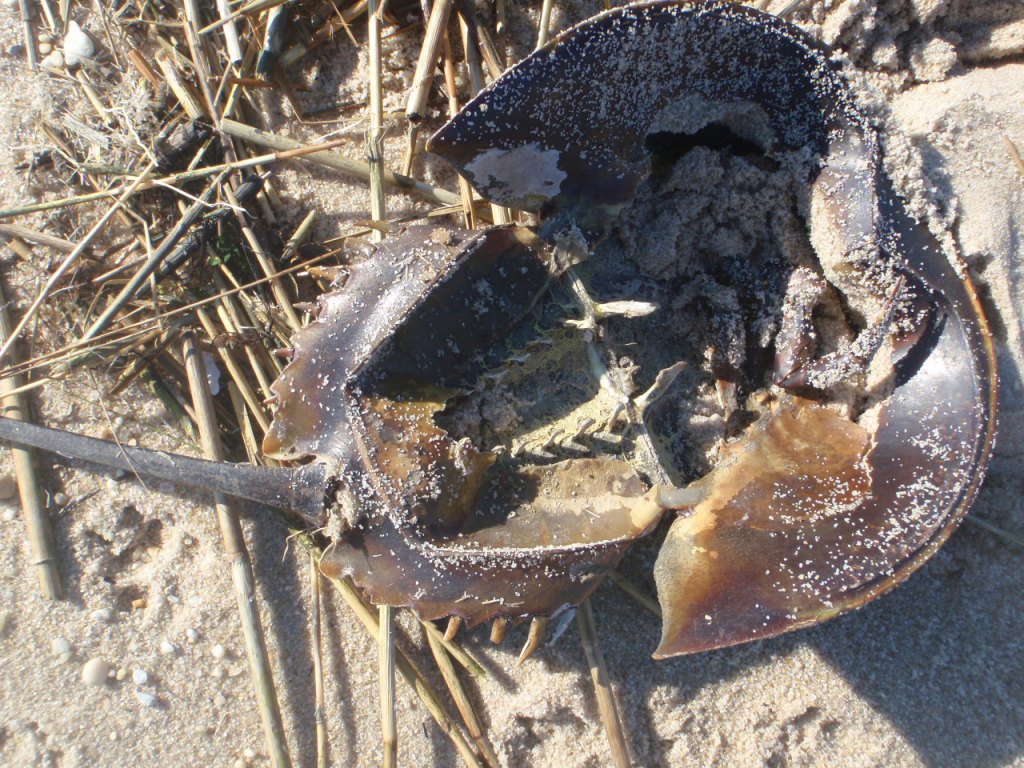
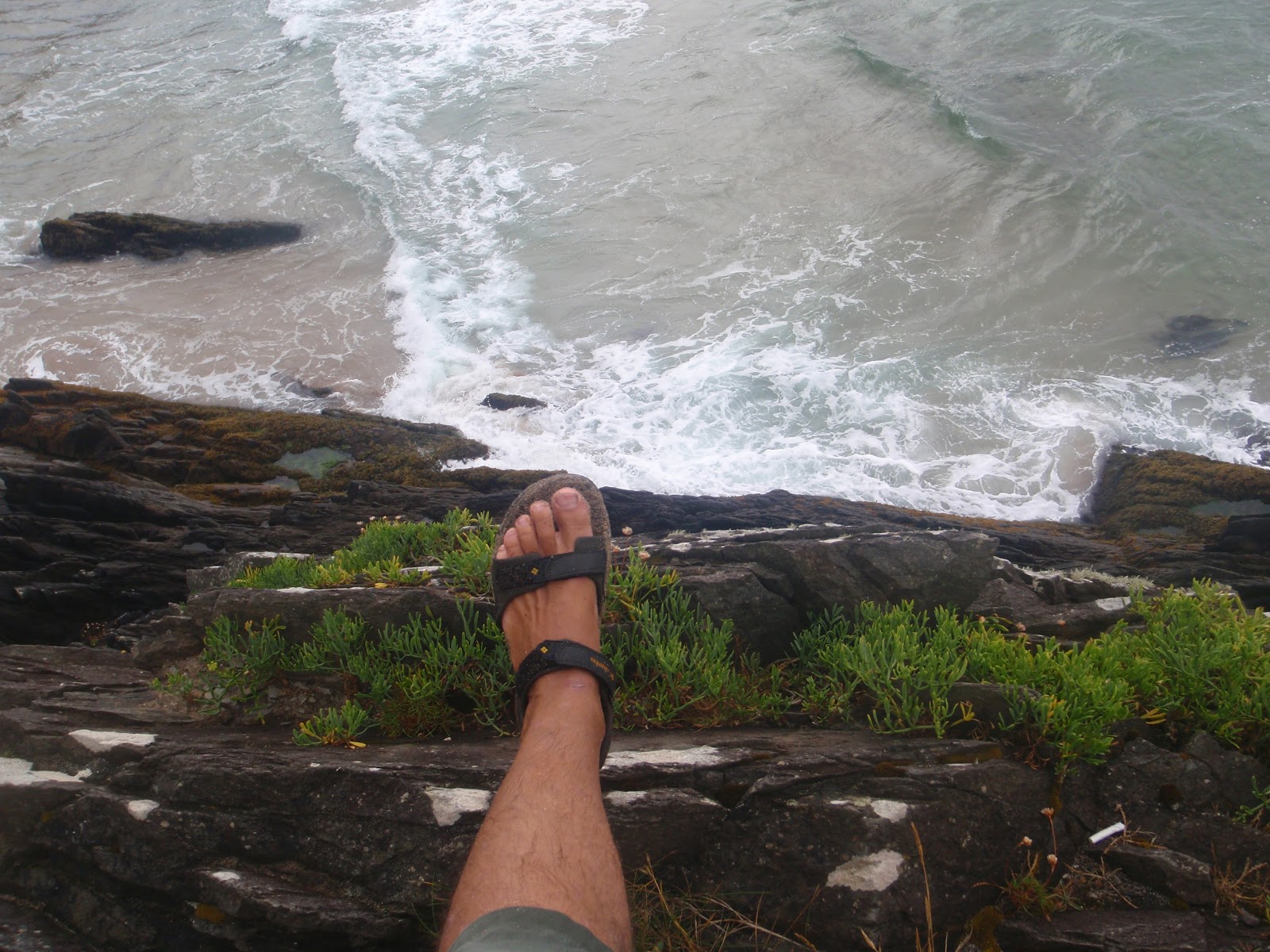
Showing posts with label death. Show all posts

Friday, March 9, 2018

Lenten prayer

Wheat in our classroom window a few years ago.

The miracle was not so much the resurrection, such as it was.
The miracle is that any of us are here at all.


Amen.


Thursday, March 8, 2018

On mending a fence

Near Higbee Beach
The earth breaks.
The rains come. The mud heals. The sun returns.
Then the earth breaks again.

For a few dozen cycles of the billions life has been around, you get to share the dance with others, ignorant of where the music comes from, but audible if you listen.
The fence post a few years ago.
The nor'easter blew over a stockade fence post I dug into the earth a quarter century ago. I got out my tool bucket,

A couple of my tools are from my grandfather. He was born in the 19th century, an ocean away. He ran away from home, ended up on the front for two weeks out of three for a several years "fighting" for the same folks who starved his people not so long ago. He lost all his teeth (a toothache bought you an extraction and a day off the front) and got shot in the back of the neck ("I'll be damned if I got shot in the front, I was always running.")

I do not use his tools because of his stories--I use them because they still work. But the stories make the tools feel warmer in my hands.

As I was digging out the dirt from around the post, an earthworm wiggled halfway out of its hole, looking a bit concerned that the earth had disappeared. (I do not communicate well with worms, but it was wiggling a bit, and seemed stressed). After a few minutes it scooted back into its hole.

Cabbagehead jelly seen on an evening paddle

Many have danced before you, mostly not human. We've only been dancing on this earth a short while--but it's no more earned than the air you just breathed in.

I forget this most days.
Today is as good a day as any to remind myself.


And maybe a better day than most--thinking of a few of my lambs today,


Saturday, February 17, 2018

Why I left Twitter....

This is (mostly) for me....


Mortal clams, mortal words.

This is an experiment.

I am mortal. So are you. My heart's been bouncy this week, nothing extreme, more like a polite panhandler trying to get my attention, nothing threatening, and it did.

I no longer pretend I know what's real--the dulling of age, the explosion of what's possible, it all becomes confusing. (I've had a lot of concussions.) But I know who I trust.

I have more time for the guitar, for the uke, for learning French (we're traveling to Paris in a few months), for raising Brussels sprouts, for clamming, for dancing and singing and living.

No one gives a fuck on Twitter who I am. But I do.
And so do a few folk I care about.

My blog started out as a public diary.
And it's ending the same way.


I could blame the switch from 140 characters to 280--I truly loved the game, the succinctness, the love of the value of a single word.

But that's not it.

It's the mortality.

You want to meet, want a postcard, want to connect, send me an email, and I'll respond with an old-fashioned letter.


Sunday, February 4, 2018

Death on the Delaware Bay

The fish after losing consciousness....and yes, fish are conscious.
I looked for crocuses, but found none, so I went to the north side of the Cape May ferry jetty today, one of my pondering places, maybe the pondering place. The afternoon was February bleak.

The south breeze was about 8 or 9 knots, but the water was flat next to the rocks. I was hoping to find a seal (and I'm always hoping I'll see the spout of a whale again).

I saw a swirl, I thought. Then I saw it again.

A small striped bass, maybe 4 or 5 pounds, was cutting across the surface. It was not well.

A ferry was on its way in. Ferries cause a lot of current on both sides of the jetty. I know because I watch. (I do not understand the physics, but I know what I see.)

The bass fought against the surge, and when the surge reversed, as it does, the bass slammed headfirst into the rocks.

It floated sideways unconscious, the gills still weakly moving.
And then nothing.

I've watched a lot of humans die, including my parents. I've killed a lot of the living, and some would argue I killed my Mom as I eased her pain with increasing doses of morphine and Fentanyl.

I watched a manchild die on his 18th birthday, back when cystic fibrosis meant early death, when he was finally old enough to demand his breathing tube be removed.

And I am always, always shocked by death's finality. The myth of the soul helps us grasp death's final incomprehensibility, but it's just that. A myth.


I went home and picked some kale, in the middle of winter. We will eat it this week.
This is not a metaphor, a fable, a parable.

It's just life.


Maybe I needed the reminder. 


Sunday, December 31, 2017

New Year's Eve

A couple of year's ago on New Year's eve.
Closest thing I come to resolutions these days.


I watched the sun as it set yesterday.
I watched the sun as it rose again this morning.

I don't do this often enough, few of us do.

Just a few minutes after the sun broke through this morning, a twitchy squirrel sat on top of a fence post, still, facing the sun, then resumed his twitchiness.

A vulture flew within 20 feet of me, its under feathers reflecting the sunlight as it banked.

I just watched.
It would have happened anyway.
And it's happening anyway.


And it will keep on happening....

Saturday, December 30, 2017

The arc of teaching

If you're preparing her for next year's class, and that is all you have to offer her when she asks why she's doing this, you are not doing this right.

If your biggest goal is to get her past the PARCC, the NJ ASK,  the NJSLA-S, the Regents, the SBAC, you are not doing this right.

If you're getting her set for college, polishing her essays, tutoring her for her SATs, writing her recommendation letters, and think that's enough, you're not doing this right.

If you're setting up internships, bringing in astronauts and engineers and lawyers and entrepreneurs into your school to inspire her to do similar work, you're not doing this right.


If you can imagine her in her last few years, aged, slower and in declining health, yet see her looking back at her life's arc with some serenity and peace, and your life had even a little something to do with this, well, then, you've earned your due.


You did it right....


Saturday, December 23, 2017

Solstice dawn prayer


The sun creaks through the gray dusk, etching the branches of a tree I did not plant. The branches are orderly but not symmetric, each fork with its own story of past light and winds, crafted from air and rain.

Every tree is different. Every branch is different.
Every tree is the same thing, whatever that same thing is, being a tree.

I am, for a moment, wordless, as I watch a world etched by purpose but not understanding. Wildness everywhere.

There is nothing to understand, but there is something to remember. We did not arise from wilderness.

We are wilderness.


We have as much purpose as a leaf on a tree.
No more, but far more important, no less.

Tuesday, October 31, 2017

Samhain, again

I have spent, in the basest sense of that word, hours
of my God-given life working on a document required of teachers here in Jersey.
That I do these things speaks to a cultural insanity, and mine as well.


And here it is a year later, and I'm doing it again.


Do ghosts exist?

I've lived  long enough to know that they don't.
I've lived long enough to know that they do.

That odd, inexplicable events happen, and happen daily, is evident to anyone paying attention. The shame is that so few of us are paying attention to the natural world, we miss the rhythms and the mysteries that  envelop our modern minds every moment.


Tomorrow is All Saints Day, to celebrate the sanctified among us, as though following some moral order could save us from the coming dark, a world in which wasp larvae eat hornworms alive, from the inside out, and humans die monstrous deaths lying in ICUs with multiple tubes pierced into the body, hoping that like St. Sebastian, we will miraculously recover.


If you need a video to be convinced ghosts exist, you don't truly know what it means to know that the dead are among us.

The question of ghosts is not an idle one. We follow spirits of our own making all the time. We follow rules and rhythms of our own making now, wrapping ourselves in a sad cocoon of  hubris, wiling away our hours fulfilling nothing more than deadlines upon deadlines without a hint of irony.


I'm headed out to a mudflat in an hour or so, under a wet and wild early winter sky, to rake up a few clams, alive as I am, and as alive as I am, I will be as dead as those clams will be tonight in less than a lifetime.


Until you believe in the ghost you will be, you cannot truly live.
Originally posted 3 years ago. I like rhythms.


Thursday, October 12, 2017

Mid-October


The number of years I have of days growing shorter is growing shorter, true for everybody, I suppose, but still surprising to me.

The sun has gotten lazy, the night more bold.

Monarchs will land on my shoulder now, and a hummingbird buzzed inches from my ear a couple of weeks ago. Other beings no longer see me as a threat, though I still have most of my teeth.


I continue to teach, hope to do so for some time, and some time is all we can ask for. As the stridency of the college-ready, career-ready corporate crowd rises to octaves above this old man's range, the reason I teach, and the reason public education matters, gets down to empathy and the pursuit of happiness.

As we head to darker times, knowing (and remembering) what matters matters.


I think I am a happier creature than many (if not most) of my lambs. I'd like to make that untrue.

So I teach.


I trust I make a difference.
I hope I makes a difference.

Thursday, November 24, 2016

Thanksgiving dawn

Prayer

Whatever happens. Whatever
what is is is what
I want. Only that. But that.

We are, of course, the ghosts, and we will talk of the ghosts before us today, the ones who used to sit there, the ones who used to tell that story.

We are the ghosts who record the world, who fear the loss of life we never quite get, who value words over the world, as it is, for what it is.

We are the ghosts who rattle our way through grocery stores, and glide by in our cars, lit up by the ghostly fluorescence of lamps fueled by burning the remains of life before words.

We are the ghosts who live in a universe that does not exist, of worry and time, of dollars and bonds, of pride and envy and desires only words can conjure.

The world was here long before us, and will still be here long after you are gone, no matter.
***

The natural world, the one we can observe, the one that refuses to acknowledge our skin as boundaries or our brains as special, pushes the ghosts aside.

You will hear folks say they feel "small" when they sit, still, under a canopy of stars of a truly dark sky.

You will hear folks say they feel "tiny" as they sit at the edge of the Atlantic, their senses massaged by the rhythmic rumble of the waves, their noses awakened by its salty edge.

Even a drop of pond water, when observed for more than a moment, reminds us that we are the ghosts surrounded by countless living organisms, doing the same things we do, for the same reasons, and makes us feel small again.

Feeling small feels good.

A tiny bit of something trumps a whole lot of nothing. Tiny is a human conceit.

So while you're thanking those who keep the human ghostly world humming (and I am truly thankful for that), take a moment to thank the millions upon millions of critters in you, on  you, of you. Thank the plankton and the trees and the moss for the oxygen we breathe, the food we eat.

Then laugh out loud, for the universe cares not a hoot if you give thanks or not, it will reward us just for knowing it, or whatever verb we are when we shed our ghosts by the sea or under the stars.

Amen.


We are of this world
and will always be.
Take away the words
and then you will see.


And yes, words from the past, again.


Saturday, November 5, 2016

Clamming in November

Written 8 year ago on a blog long abandoned.


I got a hankering for clams, and paddled over to Richardson Sound to one of my favorite place in the universe.

Slate gray sky above, slate gray water below. The water's still warm enough to wade in, and the tide was creeping in over the clam bed.

I was mostly alone, at least by human standards. A couple of turtles watched me paddle, and a couple of loons called to others, warning of my approach.


I am (finally) getting competent with the clam rake. My hands can now "feel" the texture of the mud as I comb the bottom. I still dredge up a stone now and then, but the ones that fool me now at least are shaped like clams.
***

I scratched up enough clams for dinner, and a few more for my Auntie Beth, then paddled home. It was a gorgeous morning.

Clamming lets you see things you forget you care about. Clams are in no hurry to escape; the only urgency is the rising tide.

You can watch the tides rise and fall. Literally, if you take the time. I take the time.


 I clam at the edge of water. The edge rises perceptibly as I work.

The edge's personality changes over the couple of hours I rake.  It creeps up stealthily, smoothly, for a few minutes, then takes tiny staccato steps for a few more. It pauses. It retreats for an instant, then surges a bit more.

 The edge does not define the tide. Its jerky journey up towards the debris left by the last high tide reminds me what we cannot know.


Tonight we are eating red hake for dinner. My son and I caught a few yesterday on the ferry jetty. Slaughtering fish is not easy for us, nor should it be.

We can try to minimize slaughter by calling fish "lesser" animals.
We can pretend no pain is involved.
I did not raise my son to pretend.

 Before we took the fish home, we made sure we had enough for dinner. If not, we release them.

 Life is messy. We take great care in school where I teach to put things in boxes and categories, to feed into the great mythology we have created, a mythology that now precludes children from knowing where their food originates. We keep biology clean.


 We're part of a huge morass of energetic goo that replicates and plays and consumes and replicates and plays and consumes some more. Life involves fluids and combustion and not just a little bit of mystery.

Monday, October 31, 2016

Samhain, again

I have spent, in the basest sense of that word, hours
of my God-given life working on a document required of teachers here in Jersey.
That I do these things speaks to a cultural insanity, and mine as well.


And here it is a year later, and I'm doing it again.


Do ghosts "exist"?

I've lived  long enough to know that they don't.
I've lived long enough to know that they do.

That odd, inexplicable events happen, and happen daily, is evident to anyone paying attention. The shame is that so few of us are paying attention to the natural world, we miss the rhythms and the mysteries that  envelop our modern minds every moment.


Tomorrow is All Saints Day, to celebrate the sanctified among us, as though following some moral order could save us from the coming dark, a world in which wasp larvae eat hornworms alive, from the inside out, and humans die monstrous deaths lying in ICUs with multiple tubes pierced into the body, hoping that like St. Sebastian, we will miraculously recover.


If you need a video to be convinced ghosts exist, you don't truly know what it means to know that the dead are among us.

The question of ghosts is not an idle one. We follow spirits of our own making all the time. We follow rules and rhythms of our own making now, wrapping ourselves in a sad cocoon of  hubris, wiling away our hours fulfilling nothing more than deadlines upon deadlines without a hint of irony.


I'm headed out to a mudflat in an hour or so, under a wet and wild early winter sky, to rake up a few clams, alive as I am, and as alive as I am, I will be as dead as those clams will be tonight in less than a lifetime.


Until you believe in the ghost you will be, you cannot truly live.
Originally posted 2 years ago. I like rhythms.


Sunday, October 30, 2016

Summer's end is coming

Danse Macabre, Michael Wolgemut, 1493 woodcut

Summer is winding down. The shadows shift, the dead start to stir again, knowing their clans will soon grow, fresh stories from the world of light. Samhain is coming.

I gathered my last handful of beans, nibbling a few right off the vine. Though their leaves are mostly gone, the pods had the exceptional sweetness beans take on in their dying days.

I picked the last few leaves of basil--most have gone to seed, their reason for existence. A tired honeybee plopped herself into the bowl of basil leaves and started licking the wet edge of a torn leaf. No reason to shoo her away.

A few minutes later she flew a foot or two away, then became too heavy to fly. I doubt she made it back to the hive. Samhain is coming.


I found an eastern black swallowtail cat on some parsley--I'm usually less than kind to caterpillars, but this one was not actively munching on the plant, perhaps it just molted, and there was only one this time. It still has a way to go before becoming a butterfly, and it better hurry before the first hard frost. Samhain is coming.


Along the beach I stumbled upon a blue crab claw, almost as big as as my hand. The claw was fresh, its owner still possibly alive within a few yards. While I prefer my fingers to the pincer-grasp of the crab, I have seen crabs do delicate work, picking off tiny pieces of food to eat.

But this claw will no longer feed its larger being--Samhain is coming.

I wandered a bit further down the beach to the ferry jetty, walked to its end, and just as I was headed back to shore, I saw the first dolphin, one of many, chasing a school of fish. The fish were a foot or two long, and they were not jumping for joy.

The shadow underneath is a dolphin.
I doubt that this particular fish made it through the day. Its Samhain has already come.

Dolphins always bring us joys, so I called Leslie and asked her to join me at the jetty, She drove, and I'm glad she did, because I was tired, and the spring had left my legs. I needed a lift home. My Samhain is coming, too.


Photos taken yesterday.


Monday, August 8, 2016

Nagasaki

Nagasaki, again--because we must never forget.


On August 9, 1945, just over 2 1/2 pounds of plutonium was converted to energy 1650 feet over Nagasaki.

Two and a half pounds--about the weight of a 28 week premature newborn baby.

é•·å´Ž


Italic


Yosuke Yamahata, A Japanese army photographer, took this picture the day after the Fat Man fell over Nagasaki.

More of Mr. Yamahata's photography can be seen here.


The photo and the quote are from © The Exploratorium, www.exploratorium.edu

Yes, this is a repeat, and will be repeated every year that I maintain the blog.
We must never forget what we are capable of doing. Never.

Thursday, August 4, 2016

A late Lammas, again

Yep, mostly the same post sixth time around--I like the rhythm of the year.


"No ideas but in things."
William Carlos Williams


The English had a sensible name for this time of year before William the Conqueror blew through--weed month (weodmonað). We teeter towards the dark months. Things fall apart.

The sunlight diminishes perceptibly now. The plants know.

The past week we've eaten deep purple eggplants and bright pink brandywine tomatoes, yellow summer squash and green-and-red striped beans. Today we will pick basil for pesto, some for tonight, some for February. A bowl full of ripe blueberries waits for us, sunlight incarnate.

But the sunlight is dying, and the plants know.

We do not speak of religion in class, at least not formally. Students occasionally ask religious questions, and I deflect them. I explain that some things cannot be known through science, and that what I believe beyond the limits of science falls outside the province of class.

In class we talk of light and hormones, photoperiods and abscisic acids, to explain how plants know. We talk under the hum of fluorescent lights, time marked by defined blocks of time. In class, September light is exactly the same as February light, and class is always 48 minutes long, no matter where the sun sits.

This week marks the start of Lammas, or Loaf Mass Day--joy for the harvests that are coming and regret for waning sunlight. Lammas used to be celebrated--the first wheat berries of the year were ground into flour and baked into bread offered in thanks, some used for Communion, some for the feast that followed.

We thank God (or Tailtiu or Lugh or some other forgotten gods)--harvest time reflects death and grace, whatever the culture. Death and grace feel foreign in the classroom, indeed foreign in our culture. We pretend, at our peril, that life is linear.

Lammas falls halfway between the summer solstice and the autumnal equinox. The days are shortening, winter is coming. Until you feel the seasons in your bones, until you follow a grain of wheat from the ground to plant to bread to you then back to the ground again, the modern myths may be enough.

Science can explain why plants produce fruit when they do, and I can teach the steps. We can test whether a student learns what I present, and the students that do this best have access to all our culture offers.

You can become very powerful, very rich, without knowing grace. You can go far in life if blessed with intelligence and beauty, degrees and citations, without ever knowing what a wheat berry looks like, without ever kneading a lump of flour and water and yeast into glistening dough.

In the end, we don't know much, and may never know much. We can, however, recognize grace. We might not grasp it rationally, but we we can grasp it--a good reason to celebrate Lammas.


The Skeleton of Death dances every hour in Prague--photo of the Prague Astronomical Clock by Sandy Smith found on VirtualTourist.

Monday, May 23, 2016

We are all Louis Slotin


 An award--and a few months later, a fatal slip.
"At 3:20 PM on Tuesday, May 21, 1946, Louis Slotin's hand slipped-- a small, practically insignificant blunder, except that Slotin was the chief -bomb builder at Los Alamos, and at that fateful moment he held in his hands a plutonium bomb core named "Rufus".  The slip caused a chain reaction that in turn released a deadly "prompt burst" of radiation.  Slotin and others saw a blue glow and felt a momentary flux of heat on their faces.  Slotin flung the shell to the floor but it was too late. The damage was done.  In the milliseconds it took for the plutonium to spit its deadly neutrons, Louis Slotin became a walking dead man."  -Paul Mullin
Slotin was 35 when he saw that blue flash, the beginning of a long few day as he burned from the inside out.


Hubris, confidence, arrogance, laziness, cleverness, humanness.

We are all Louis Slotin, pushing edges, trusting our senses, our muscles, over the power we coalesced. It is why we are the dominant species, and also why we will not be on this planet much longer than the wink of a stegosaurus's eye.

We name plutonium bomb cores.
We worship dead humans.
We forget who we are.

You are no more (or less) gifted than the earthworm a few yards away from you, churning through the soil, eating, fucking, being.

If you teach science, technology, marksmanship, political science, or anything else that entrusts humans with power, remember Louis Slotin in your prayers, if you still pray.


The earthworm will be here long after we are gone.

Tuesday, February 16, 2016

Thoughts on a dead red-winged blackbird

Another dead bird story....


An active red-wing blackbird's heart rate is a hard thing to find on the internet. An American robin's runs 570 beats per minute at rest, but a pigeon's only 115. (It does, however, bang up to 670 bpm when active.)

So I am going to make an assumption that a red-wing blackbird's heart beats around 500 bpm. That's 30,000 beats in an hour, a bit over a quarter billion in a year. They can live over 15 years, but not with winters like this one.

Found on the edge of the Delaware Bay

A human heart beats about 3 billion times in the lifetime of an elderly American.
The red-winged blackbird I found frozen on the edge of the bay has a still heart, one that may also have beaten as many times as the average American's if the bird had lived a dozen years.

No way to tell.

Modern humans like to measure things. On Wednesday my modern heart doctor will measure a few things with modern instruments, and he will give me modern advice (again), and I will likely ignore some of it (again).

His job is to maximize the finite number of times my heart will beat; mine is to maximize what I do with the beats I have left. These are not coincidental goals, and for what it's worth, neither of us expects me to drop dead suddenly anytime soon, even if I ignore some of his advice.

What we choose to measure, or that we even choose to measure, dominates our culture and infects our schools. We are raising children to contribute to the global economy, as pointless a task as counting how close we are to the 3 billion beats most of us will get, especially if the last few million are as agonizingly painful as those of my mother, and so many others.

Photo by Steve Paine, shared via CC

I do not believe that any of us are born with a specific given number of heartbeats, but I do know we are born with a finite number of them.

Doctors, teachers, carpenters, economists,  we all count.

We all count.


Make the best of them.


Wednesday, December 30, 2015

We are hol(e)y


Thoughts while waiting for the light to return.....

While science rests on models, abstract shadows of patterns drawn out of noise, the models ultimately depend on nature.

Nature is the concrete stuff around us, in us, of us. Our children do not know this because we do not know it ourselves, so we do not teach this.

If we knew (and made a deliberate effort to remain conscious of what we know) our relationship with the natural world, we would change in ways that would make us happier. But that's never been the point of public education, no matter how much we pretend otherwise.

***

Our deepest selves, in the literal sense, take in molecules from this concrete world with each breath--our skin is a holey border revered by our sense of self, an ego that believes we are something separate from this stuff around us--but every living cell needs to interact with the world beyond ourselves or else it will die.

When we bleed, we mourn the tear in our border, but not the thousands of white blood cells, of us, writhing in a drop of blood that falls from a pricked finger into the rich earth of the garden. A few bacteria may be caught in the unseen drama before our cells ultimately lose the fight, themselves consumed by life unseen in the dirt.

While the story is abstract, the reality is not.

We are holey, we are not one.


***

Living (for most critters on this planet), means doing the things you need to do to get the stuff and energy required to keep your pieces together in some sort of organized way that lets you stay alive. While your physical being (a cell, a body, a colony, whatever) eventually crumbles, this living process called life continues through generations, life that is as much a part of you eons ago as it may be eons from now. We all share this with all other living things, reason enough to rejoice.


As we crumble and rebuild, crumble and rebuild, it becomes obvious that you and me are put together from stuff outside of our holy selves. Plants knit together the carbon, and we take it from there. What is not as obvious is that we are crumbling and rebuilding moment by moment, so that the stuff of you today is hardly the stuff of you just a few years ago, stuff that was once part of the nonliving, stuff of the dead, stuff of the still living.

We are holy, we are one.
***

The stuff we have here on Earth doesn't change much day to day--we get a few hundred tons of space dust every day, and we're losing hundreds of tons of hydrogen gas at the same time, but neither has much to do with day to day living here on Earth.

We are literally recycled stuff, bits and pieces put together in orderly fashion through the living before us, using the grace of free energy released by the sun.


We live (and die) by cycles, the cycles of stuff, and the cycles of seasons (which ultimately depend on the waxing and waning of available sunlight.


The great religions, at their best, have shared these truths with us for thousands of years. Science is starting to get there now, after a dark period of reductionist thought that still dominates our thinking in the western world.

So take a breath--feel the oxygen enter your lungs, imagine it coursing through your arteries to your cells, know that it will be transformed to water as it rejoins protons and electrons stripped from water by a plant not so long ago.

Eat an orange--feel the food surge down your esophagus, to be broken down into tinier and tinier bits, ultimately reduced to the carbon dioxide you breathe out, and to the protons and electrons that will join the oxygen you just took in.

Reason enough to say grace to the stuff, to the light, to us, to everything we call "stuff."


Photos by Leslie (sludge pile, sunset) and me (hops, shell)


Thursday, December 24, 2015

On joyful noise and the human condition

Found on our classroom typewriter

One of the joys of clamming in December is listening to Brant geese chatter back and forth a few yards down the flat from me. Mostly at each other. Sometimes at me. Occasionally at nothing more than the water and the sky.

Wordless, but not senseless.


One of the joys of spending a good chunk of my awake hours in a room full of adolescent mammals is listening to them talk.

Not the words--I'm too deaf to spend the energy discerning whatever abstract nonsense is being piped about. We've been sharing the same abstract nonsense ever since Adam blamed Eve for his own foolishness.

No, I mean the warm wall of sound, the rhythms of vowels carved by consonants, the dance of the back and forth cadence of voices, the wavering pauses.

"Dance of Death," Michael Wolgemut

Add the fleeting facial expressions, the aromas and pheromones, and a cacophony of noise to the elders becomes a symphony of meaning for the young.

We are all mammals, even teachers. Our most intense moments of the shared sounds of communion dissolve into wordless exchanges. Shared meals, shared music, shared bodies, shared death, we remember for a moment we are all one in this world.


This is what we lose by texting

Saturday, December 19, 2015

Photosynthesis in December

This living hand, now warm and capable
Of earnest grasping, would, if it were cold
And in the icy silence of the tomb,
So haunt thy days and chill thy dreaming nights
That thou would wish thine own heart dry of blood
So in my veins red life might stream again
And thou be conscience-calm’d–see here it is–
I hold it towards you.

--John Keats 


The shadows are as long as they will get in these parts, and will stay with us for a few more days. Our shadows trail us like stretched cartoon monsters chasing us over browned grass and fallen leaves.

Too little sun left now to put back together the stuff we break, complex molecules put together by plants in brighter times. Every moment we live we create chaos out of order, our bodies hanging on by the grace of entropy, freeing the energy of sunlight trapped by the plants now waiting for the return of spring.

Our lives depend on this instability--large, unstable molecules masquerading as a grilled cheese sandwich, a pint of ale, a bowl of cereal literally shredded apart in our cells and tossed out of our bodies with every breath.


Puff on your palm--the moisture and the exhaled gases were part of the bread you ate less than a day ago, the heat the energy of transformed sunlight captured in July by a wheat berry in Kansas. This is the material, real world, the stuff in us, of us. This is not metaphorical.

There is no global economy--it is the sounds of words and numbers and data, all too abstract to sustain even the tiniest critters among us. Yet that is what we tell ourselves matters.

The real economy is found in the breath we exhale, the knitting of these cold and stale molecules back into the rich stuff we call food, only to be broken again. And again. And again. Until we cannot do it anymore.

A year ago the "I" part of me came close to falling out of this lovely and utterly terrifying cycle of life, though I'd still have been a part of it, my cremated corpse contributing to the building blocks of the living.

I'm still here. So are you. Let's keep it real.


We work at what we worship, and the gods of the old were far less abstract than the ones we worship today.
Photos by Leslie Doyle. If you want to use them, ask.