Wednesday, January 16, 2013

On stories of the universe

If your eyes are not deceived by the mirage do not be proud of the sharpness of your understanding. It may be your freedom from this optical illusion is due to the imperfectness of your thirst.


Two years ago I removed most of my fish from a tiny pond one late autumn day, and put them in a larger pond.

The next spring, I found a fish left behind.


For over two years I have tried to catch it, and for two years it evaded me, living alone in a tiny universe by my back stoop, surviving under thick ice in January, brutal warmth in July. It had not seen another fish for over two years.

Until last night. Under the cover of a cloudy wintry night, I managed to slip a net under it.

And now it swims with other fish in the larger pond, and while it may not make a difference to the fish (though I suspect it does), it certainly makes a difference to me.

How much of the universe exists beyond what we imagine, and how much of what we imagine does not really exist?


It's a more difficult question than we recognize.


Sunday, January 13, 2013

Biology vs. school "science"

Darkest six weeks of the year are behind us now.
In a few weeks, the crocuses break through the ground.

The solid stuff of crocuses is mostly made from  carbon dioxide--we release some with every breath.

Backyard crocus, February 2011

The carbon dioxide we release wended its way from deep inside our cells, from our mitochondria, tiny membrane-wrapped bodies that strip the electrons off the food we eat, electrons trapped in awkwardly unstable positions, ultimately relaxed again as they join with oxygen molecules, to form water.

Mitochondria are not human--they have their own DNA, reproduce (mostly) without our help. Every one you have came from those in your mother's egg. They have their own history.

When we starve, we lose most of our weight through our lungs as countless particles of carbon dioxide.

It takes a lot of energy to split those water molecules again, to excite those electrons, to smush CO2 back into the stuff of plants.

The sun provides the energy. And it's coming back, as it has again and again and again.
 ***

I hardly teach biology anymore--I teach sophistry. Learn the magic words, and the patterns among the magic words, and you are wise. 
    polymerase
        peptide bond
            phospholipid bilayer

I get paid reasonably well to do this, and so long as my students fill in the Holy Scantrons read by the Great Machine in Trenton, and if the pattern comes close enough to the patterns discerned as truth, my students are certified as worthy of participating on our new global workforce, machina ex deus.


If you never care to watch the sun's annual demise and rebirth, you will never be more than a technician. That seems to be OK to just about everybody these days--technicians are a lot easier to manage than philosophers, and they're certainly easier to please.

And if I accept my role as just a 21st century teacher, delivering some bon mots to help my lambs pass the PARCC exam, then I will never be more than a technician, either.


The sun has started its climb north again. The winter chill reminds those of us closer to our end than our beginning that maybe, just maybe, safety isn't the primary goal in a life that will certainly end in death.

Time to get moving.


It's really not all that complicated, this life/death thing. You are, and then you're not.

Saturday, January 12, 2013

Well that's a relief....


Science teachers across the nation can relax.
The Next Generation Science Standards draft has been reviewed by "workforce readiness experts."


If nothing else, we've created a new line of work....

Sunday, January 6, 2013

Epiphany

Today is the Holy Day of manifestation, the day many Christian churches celebrate the recognition of The Christ as, well, divine.


And while millions are inside, watching men dressed in white do whatever it is men inside dressed in white do, a living jelly washes upon a winter beach, it's transparent body magnifying grains of sands beneath it, as it lies dying under the light of our sun.

And because I do not know better, I pick up this tiny blob of life, and gently lay it back in the bay, and maybe utter a tiny prayer, maybe not, since I no longer even know what a prayer sounds like, but I know this much:
The world is large and deep and full of mystery, and if I cannot see this at my feet, I cannot see it anywhere.


Three Wise Men? I'm going with the jellies....


January beach walk

This one is for me...


Yes, we saw a great egret and a great blue heron within minutes, but to say as much is to reduce a walk to calisthenics, marking off species as we mark off steps, as though numbers make our accomplishments more accomplished.

 
 I just want to walk into the wonder.

When I watch a great egret pick its way through the edge of the reeds, moving like a lizard, until a flash of white as it stabs at yet another fish, I am not thinking "Eastern Great Egret, check!"--I'm not thinking at all.

 
I may be happiest when I am not thinking, and I've gotten pretty good at not thinking. Not thinking as the sun sinks below the edge of our bay. Not thinking as I trim the last of this summer's Brussels sprouts. Not thinking as I nibble on a piece of garlic.


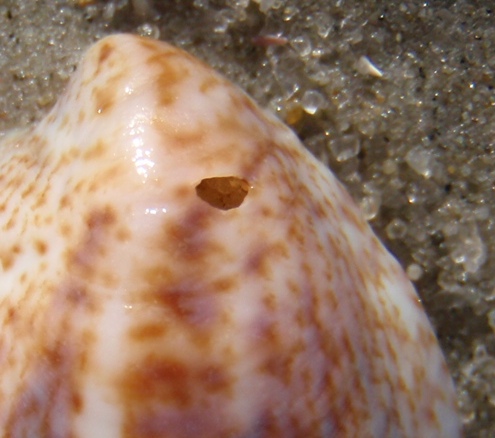
In January, the dead dominate the beach. Shells cast long shadows even at noon. January's filmy sunlight filters what can we see, what we can know.

There's no pretending how things will end, and that's OK.


We are alive for now.


Triple sun dog kind of day...

Saturday, January 5, 2013

Clams, grace, and industrialism


Low tide came early today. The water temperature is down to 40 degrees--the clams are, well, clammed up now, waiting like the rest of us for this winter nonsense to pass.

Clams eat, they grow. I like to eat them, but I also like the idea of them. I like the way they fit in my palm, I like being on the flats where they live. I like the way my rake resonates against one. I reach into the chill and scoop it up.

Never heard one say "Drat!"
***

Clamming by hand has a cost. I stir up the bottom with my rake, enough that fish will snoop in the area I just disturbed.

I occasionally impale critters not meant for the dinner table--I managed to spear two young horseshoe crabs on a bad afternoon clamming (though a worse day for them).


But I at least knew for a moment the creatures I wounded. Knowing didn't make the agony of the broken horseshoe crabs any less painful, though they at least got a prayer as they sank to their deaths.

We got ourselves tossed out of the Garden a few thousand years ago--clamming is about as close to the Garden as I'm going to get.

I do nothing to deserve the clams, they just are.
I barely need to work to get them, they're abundant at my feet.

I'm just close enough to wilderness to wonder what we lost when we decided to stay home and plant wheat 10,000 years ago.

I work over an area a bit over 500 square yards, and figure about 5000 clams live there. I'll take about 10% of them this year, and next year 5000 clams will still be there, barring any ecological disaster.

Undeserved love, but given anyway. Can't think of a better definition of grace than that.
***

Rare clammers still make a living raking by hand. They know the critters like a child knows the sun.

Most clammers today dredge. Water is shot over the clam bed, creating a cloud of slurry, and the dislodged clams are dredged up to daylight.

The clammers will tell you they are oxygenating the water, feeding the fish, and at any rate, are not doing any permanent harm. Still, in a day when a clammer may take over 10 bushels (an old word), he's not going to know one from the other.


The environmentalists will tell you that the bottom of the seas are being scarred, and maybe they're right.

I compromise--I damage the bottom, true, but I wrestle every clam I eat with my rake, with my fingers. I never wear gloves, which may be more a testament to my stupidity than anything else, and I've spilled a bit of blood back into the bay.

But it seems more right that way, as I nestle my fingers under another snug clam from the bay to my basket.
***

I know every clam I eat. I know where it lived. They don't travel horizontally much, maybe a foot or two in a couple of years.


If ever I get sick from a clam, I can tell the DEP where it came from, withing a few dozen yards. But I won't ever get sick from a clam I know, usually in my gullet before the next low tide.

Beyond the careless destruction of habitat, the sin of the industrial clammer is not knowing the critters he sells. Since most of us are industrial eaters, not knowing where our critters came from, I can hardly blame the clammer. He's just making a living.

I can hardly blame the engineer who designs the hydraulic dredger, nor the driller at Exxon who mines oil for his boat, nor the construction woman who paved the ramp where the clammer launched his boat this morning.

No need to blame anyone or everyone, we are all complicit since we left the Garden. Grace does not dictate the market values, and we all have at least one person to feed, to shelter, to clothe.
***

You're not going to find grace at Whole Foods--you'll find fancy foods at high prices, and a few of the slaughtered beings there may have lived a slightly fancier life than their brethren at Perdue. But you still do not know them.

You pay for the privilege of a fancier form of industry, but you had to earn your dollars somehow. For most of us, earning cash requires participating in an industry.

To know grace you need to see the life drain from the creature you are eating.


Make a resolution to eat something you slaughtered, or at least grew. Religion has fallen out of favor, and our industrial cocoons shield us from grace.

Grace is never easy, nor cheap.
But it is possible.


Yes, the annual beginning of the year clams and grace post.
All photos by us, CC and all that.

Chris Cerf n'est pas un enseignant


“When you add up all the time of NJASK [our state testing machine], it’s quite substantial. I’m very sensitive to not adding more time to it, very sensitive . . . It’s a conversation we’re in the middle of, finding the right balance.”

One interesting side effect of having business folk like Cerf control education is watching the language they use.

From a pure semiotic point of view, these kinds of statements are fascinating. Sensitive. Balance. Conversation.

I have met the man, and have been privileged to have spent hours talking to him--he's generous with his time, he's bright, and (this is why I find language so utterly fascinating and frustrating), he believes what he says, and because he does, gets frustrated with ankle-biters like me who point out inconsistencies in his Broad-style education reform world.

He believes he's sensitive, very sensitive, to the time testing steals from the true work of teaching, but he's not--he's just aware that this is an issue.

Sensitivity and awareness are subtlety different words, and in these subtle  spaces between the words we tuck our inconsistencies, and our conscience. If he were truly sensitive to the issue, he's not toss around words like balance as though we're now negotiating, to the tenth of a percent, the time we will dedicate to testing.
The Treachery of Images, RenĂ© Magritte

Talking to powerful people who believe their own words and hide, perhaps unconsciously, in the subtle gaps of meaning is like punching pillows. You get to blow off some steam, there's satisfaction in sinking a jab deep into the down, but when you're done, the pillow is still the same pillow.


Meanwhile we march headlong into the disaster that will be PARRC testing.