Showing posts with label bad science. Show all posts

Monday, December 30, 2013

Our evolving ignorance


evolution2013-1 

It gets worse, at least from a biology teacher's point of view:

Only about a third of Americans accept natural selection, the cornerstone of biology. That's like "believing in"  chemistry without accepting the concept of atoms, or physics without accepting inertia.

Forget NAEP, forget NGSS, PARCC, and CCSS--forget all of that, because whatever we're doing is not working, and will not work, so long as we continue to treat children as standardized units, as long as we treasure obedience over skepticism, as long as we continue to reward the worst of our behaviors at our highest levels of power.

In the meantime, I will continue to plant seeds in our classroom, both figuratively and literally, until the happy (but not inevitable) day when our children bark at the nonsense we feed them every day at home, in school, in malls, in just about any space where kids encounter adults.


Take a child clamming, gardening, fishing, crabbing, kite-flying, hunting, whatever it takes.


Saturday, August 10, 2013

Maybe I'll try teaching science for a change

Saw a double rainbow just before dusk....


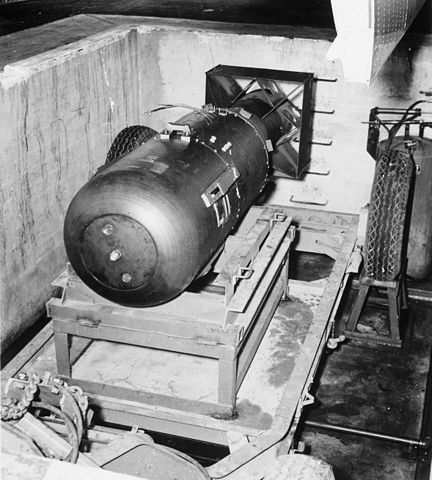
Science did not create Little Boy and Fat Man.
Technology did.
Little Boy

But our knowledge of the natural world made the technology possible.

I do not train engineers, I do not train scientists--I share the natural world with children. Our classroom is just over a mile from where the folks from the Manhattan Project originally purified uranium--the site is still contaminated.
***

Our Superintendent-in-Chief Arne Duncan believes that "we have to educate ourselves to a better economy." In a world defined by the global economy, education is reduced to a tool needed to create citizens worthy of this new world empire.

For this Scarecrow, the degree matters more than knowing

Most of my kids remain blissfully unworthy, still filled with a  joie de vivre that requires taming for success in Arne's world.

I have little faith in Duncan or anybody else who places ambition over love, though I do grudgingly admire their machine-like pursuit of a life not worth living. Such a life gives him the option of not living within a stone's throw of a radioactive field.

Connecting my lambs to the natural world takes more time than the curriculum allows. Seeds simply do not sprout fast enough in ArneWorld to make biology education efficient (though Zeus knows we try--go read about Wisconsin Fast Plants®).

Every August, as the sunlight dims, I ask myself the same question, and this year I am asking aloud.
What will it be, science teacher?
Wheat, grown in our classroom

"Biology 101" again, or helping young adults build real connections to a deep, deadly, and beautiful universe, connected to and of this Earth, where food and feces trump  finances and fear.


Biology feces much more interesting than the shit we pretend matters....

Sunday, February 26, 2012

Evidence-based hypocrisy

This one meanders and is meant for heavy fire--I want to know why "evidenced-based research" is an oxymoron in education. I want to know why Gardner and Marzano are revered for their research. I want to understand why the cult of personality supersedes rationality in my craft.


I love playing with numbers, and I love trying to understand the world beyond the human noise. So do a few other folks. It's what scientists do.

If you want to know if a particular action (independent variable) has a particular effect, you set up an experiment. You minimize extraneous actions as much as you can (and eliminating them all is impossible even in the simplest experiments), run your experiment, collect your results (dependent variable), then do it again. And again and again and again....

You may see a pattern emerge, you may not. The pattern you see emerge may be consistent with what you thought you knew, it may not. If you see a pattern emerge, it may have caused by the independent variable, but, and this is critical, chances are pretty good it may not be.

If there is less than 5% chance that your results occurred randomly, they can be considered significant--and the word "significant" means nothing more, nothing less than that. You can have  results that look like change has occurred, and still have no significance, and you can have significant results that show change did not happen.

One final point. Correlation does not mean causation unless you have a perfect experiment with only one  variable--and this is impossible. If you want to know why some scientists get a reputation for walking around like they got peri-anal meter sticks under their pants,  try controlling anything for all variables.
***

Social scientists have three huge problems:

First, the myriad variables inherent in humans and their interactions  makes reducing any experiment to just one variable impossible. There are ways to minimize the noise--using huge sample sizes, for instance--but the results will always be a tad wiggly.

Second, imposing an independent variable on a select population of humans to see what happens compared to a separate, similar population creates chilling ethical considerations. Autonomous mammals tend to reject such nonsense.*

One way around this is to use retrospective studies--look for a pattern among culled data instead of trying to run a true experiment. For example, I can look at the demographic data of kids taking the HSPA, and see if there is any correlation between their Zodiac sign and their math scores. If I find a significant (again, less than 5% chance these results are random) data, I might have something worth sharing.

The last problem may be the biggest, one that infects American education today--because social science research is so wiggly, and because it tends to use retrospective data, I can make a career latching on to a piece of data suggesting correlation, scream about it, then become the go-to guru.

This happens in the natural sciences, too--people is people--but in the natural sciences, published claims are easily tested. Scientists make a living climbing on the backs of others, destroying their colleagues hypotheses with better ideas and better data--a lovely mud bath of human foibles exposed for all the world to see.

For reasons I still do not grasp, this doesn't happen much in education. We have "theories" without evidence, and handsome men gracing websites, paid to give sermons sharing their "research."
***

I have my suspicions. Careers are made selling snake oil, and there's a lot of money floating around public education.

I have no fear of research-based initiatives influencing what I do in the classroom. If decent, replicable studies shows that my lambs will learn more science if I wear an eggplant on my head, then I will do that. In the meantime, I will continue to do what has worked reasonably well for several generations influenced by Francis Parker, John Dewey, Jerome Bruner, Margaret  Donaldson, Lev Vygotsky, among many others.

I will continue to use advanced tools so long as they serve our purpose. My $2 whiteboards are superior, for what we do in science class, to our $2000 SmartBoard, but I also use 1:1 netbooks to (sometimes) good effect. My Mobi, alas, never quite took off.

I will use decent recent research, but my criteria for "decent" goes beyond a pretty face and a slick repackaging of what we already know works. Daniel Willingham (who definitely does not have a slick hairdo) is a cognitive psychologist who initially studied "brain basis of memory and learning" and now focuses on the "the application of cognitive psychology to K-12 education."

I was a pediatrician before I threw my hat into professional wrestling education. I know a lot about child development, and expected those in education would, too. (I also expected my kids to fall in love with photosynthesis at first sight--I was a bit naive going in.)

I'm all for evidence-based best practices--any superintendents out there want to try it?


*Medical research has the same issue--people are people--the Tuskegee syphilis experiment belongs in a huge Hall of Shame, as does the Fernald School which allowed Harvard and MIT to used radioactive cereal on retarded children. Theses kinds of experiments tend to be performed on the less powerful among us--the poor, the incarcerated, the children.


Young woman scientist via Shorpy/Library of Congress
Snake oil ad via Wikimedia

Saturday, January 21, 2012

Open letter to elementary school teachers everywhere

Dear Elementary School Teachers and Principals,

I know you have an impossible job, and I know you're getting hammered from 73 different angles, and I know the last person you need to hear from is another high school teacher sitting on his throne blaming you for every ill that ever afflicted humans.

Your students worship you. Every casual word that slips from your lips influences the variegated connection of neurons that forms a child's view of the world. A child's obvious misconceptions get corrected early and often, and that is great!


You've done a wonderful job convincing them spectacularly difficult things to accept are true. My lambs come to me believing that the Earth is round and that is spins, that we breathe in oxygen and breathe out carbon dioxide, that humans arrived long after the dinosaurs left.

It's the subtle stuff, though, that slips by:
  • Winter has nothing to do with how close the Earth is to the sun.
  • Oxygen does not get converted into carbon dioxide.
  • Plants do not get most of their mass from dirt.
  • Food is not energy.
  • Energy does not recycle.
Most of you know these things, and most of you are too busy prepping the children for their NCLB-driven tests to spend much time on science, and that's OK.

If you are going to spend time on science, though, please be wary of glib explanations that will confound a child's true understanding just a few years down the line.

Language matters far more than facile explanations of the natural world. Unless you know what energy is, and I got to tell you that I do not, do not pretend a 7 year old can master this. Unless you can explain a concept accurately without using science jargon, do not pretend your lambs will get it.

My students are amazed water comes out of flame, something easily demonstrated at any level of public education, yet accept that the Earth is round at face value, because you, the most powerful person in this child's life outside of family (and sadly occasionally including family), said so.

Your words carry the power of Cassandra, and like her words, can easily be confused, even when you speak the truth. I envy your power. Please don't abuse it.
Your Colleague,

Michael Doyle


Wednesday, January 18, 2012

A scatalogical myth

"In the sweat of thy face shalt thou eat bread, till thou return unto the ground; for out of it wast thou taken: for dust thou art, and unto dust shalt thou return."
Genesis 3:19 KJV


I teach high school biology. I happen to love teaching, and I enjoy learning how things work, but many of my lambs come to high school with some deep misconceptions that skew their world view.

It's mid-January, a busy time of year, but I need to take a few moments to talk to my colleagues at the elementary school level.

Psssst...you, yeah, you....come a little closer.....poop is not digested food.


The food that gets chopped into bits tiny enough to enter cells either ends up as part of you or exits as part of your breath (CO2) or your water.

When you diet, most of the you you lose is lost as carbon dioxide, bits of you lost with every exhaled breath. Some is lost as water, some as urea, but most of it gets cast off with each breath. I once lost 60 pounds, breath by breath by breath.

Why does this matter?

It gets the knee-high crowd thinking of mass ("stuff") as something other than solids. It complicates the whole food to poop business.

Trees are massive hunks of stuff made mostly of carbon dioxide drawn in through tiny holes in their leaves. We're massive hunks of stuff made from the stuff we eat, stuff mostly put together by plants.

Carbon dioxide to food to carbon dioxide again.

Thou art carbon dioxide, and to carbon dioxide shalt thou return.


OK, bile comes from RBC's, which were once food--but this does little more than give poop its lovely colors.

Monday, December 26, 2011

1st Annual Readamatic Pacer Award

My board certification in pediatrics expires in a few days--I renewed it less than a year before I started my student teaching, and haven't looked back (much). Still, I spent most of my adult life assessing child development, and I know a little bit about learning.

I do not pretend to know a lot about anything, especially matters of the mind, but education glamorizes snake oil salesmen. I spent part of today looking through the research on Accelerated Reader, and hereby awards its promotion department with my 1st Annual Readamatic Pacer  Award.


The "research" pushed by the company demonstrating the value of the AR program fails to tease out the effects of implementing sustained reading practice in a classroom (already known to increase reading) from the high tech monitoring that comes with the program.

It gets worse--there is no consistent evidence  that the monitoring and reward part of Accelerated Reader add any benefit beyond that gained through the sustained reading.

Here's some evidence-based reasoning for you--if you spend less money on nonsense, you have more money available to buy books the kids might want to read. Here's another: the less time spent "monitoring" a child's progress (done via multiple computerized assessments), the more time a child has to get back to Charlotte's Web.

Don't even get me started on Marzano's research....


Image by via Retro Thing--well worth a visit!


Sunday, October 9, 2011

"The universe is made of stories..."


"The universe is made of stories, not of atoms."
Muriel Rukeyser

This is a lovely quote, and a lovely way of looking at the world, written by a brilliant poet who grew up in a world that saw the horrible consequences of reducing the world to a machine, in a world that slaughtered millions of those who shared her faith, because of their faith.

The atom has been indelibly tied to the misnamed "atom bomb" and incredible abuses of the 20th century.

I just wish she had said "machines" instead of atoms.

Atoms, in the context of science, are stories. It's taking me weeks to convince my students that the image of atom that exists in their heads, an image perpetuated by many teachers, by television (is it called that anymore?), by textbooks, does not exist.

***

If there is ever a place to teach the nature of science to children, it's in the idea of atom--a (not) tomos- (divisible)--an indivisible particle.

Democritus' early view (poo-poo'ed by Aristotle) that matter can only be divided so far before it is no longer what it is is easy enough to conceptualize. Introduce the idea in 4th grade. Here's a piece of gold. Split it in half. Split it in half again. And again.

No way to see what the smallest particle looks like, but it's easy to imagine that there may be a limit to how small gold may be divided.

No need to bother with electrons or neutrons or protons or orbits in elementary school. A child who parrots these words is no smarter than, well, a parrot.

Come 7th grade or so, after a child has played with magnets and static electricity, and has some sense of what charge means (in the observable world, not the surreal field of fields), when a child gets that opposite charges attract, then show her the Thomson experiment with the cathode ray tube.

Not a Powerpoint, not a video--show the real thing. Deflect the stream of particles with a magnet. Here's a great video showing what we should be doing in class:


Let the kids imagine what an atom looks like now--we know it has tiny particles called electrons, we know the charges of the electrons are negative, and we know the overall charge of the atom is neutral. Let the children draw their own models that fit these criteria. See what they develop.

By high school, maybe sooner, they're ready for Rutherford's experiment--he fired alpha particles at gold foil, and most passed through without deflection. About 1 in 20,000 (give or take) wildly changed direction, as though it hit a chunk of incredibly dense mass.


The atom, whatever this thing is, behaves as though it's mostly empty space, at least when hit with alpha particles.

And that only gets us to 1911. Toss in Bohr to get us to 1913, a ridiculously counter-intuitive model of reality, leading two physicists to vow "If this nonsense of Bohr should in the end prove to be right, we will quit physics!"

And yet my students scribble down this counter-intuitive "nonsense" without complaint. Why? Because we present it as facts, as some Universal Knowledge, as something they must regurgitate. Many of them believe humans have seen individual atoms just like the pseudo-Bohr models printed in textbooks.

And here's the secret that even scientists occasionally forget--our worldview, science or otherwise, rises from stories. The concept of atom is pure story, though not pure fiction--there are deep truths in the model of the atom, as there are deep truths in great poems and novels.

Literacy cuts across all disciplines--we diminish science when we fail to see the stories.

The atom is no more real, or less, than the stories that define us. We reify the abstract every waking moment, and it's how we live and work and play as we get through a day.

But it's still all stories....


g
I lifted the quote from Mary Ann Reilly's blog--which I visit regularly.

Saturday, October 8, 2011

"Eyn chaya kazo"

"There can be no such creature."
Daniel Shechtman, 2011 Chemistry Nobel Prize


I am attempting to teach my lambs the concept of atoms. Their concept of the atom is much like that of the adults around them--nucleus of protons and neutrons in the middle, scattered electrons zipping around the "outside."


Their misconceptions are understandable--their synapses have been wended together by a combination of bad schooling and laughable pop culture that confounds abstractions with reality.

I've only managed to get them to recede into older models--some now "believe in" the plum pudding model, which is a start, I suppose. Many were stunned to hear that our models of atoms are just that--models. How many children believe you can see atoms with a microscope? How many adults?

If I present a Rutherford model of an atom in its textbook form, ask young children to memorize its parts, and get them to internalize the concept as real before they lose their baby teeth I'm pushing religion, not science.

Their performance on the state test would likely be worse now than it would have been a month ago, but this is fine with me--I'd rather a kid be confused by reality than sure of misunderstood models.

(If any parents are reading this, it's all good--the test is still 7 months away.)
***


The quote above is by a man who played with aluminum alloys during his sabbatical and found "crystal" patterns that his field of science did not believe could exist. He had trouble believing this as well, leading to his quote.

High school students do not need to know anything about the nature of crystals to learn something about the nature of science in  this tale. This is the universe--here it is. The universe has a bad habit of intruding on our models. Even professional scientists occasionally find this annoying.

We create abstract models that feel as real as the tree I see through the window, forgetting, over and over again, that our view of the world, as detailed and lovely and solid as it seems, is not the world.

Every year I tell my students the story of Erasto Mpemba, a high school student in Tanzania who (back in 1963) trusted his eyes more than his teacher. Mpemba noticed that his warm ice cream mix froze faster than cooler batches.

Aristotle apparently knew this already, and even up to Descartes' time, the cognoscenti accepted it, but part of being modern is being sensible, and Mpemba was ridiculed by his teacher and his peers.

Under certain conditions the same volume of warm water will freeze faster than cold water. This phenomenon is now known as the Mpemba effect, but no one is sure why it happens.

But it does.

And that's the point--science is about attempting to understand why the world behave as it does, and our understanding of the world will always be a bit fuzzy.

If you want the security of facts, of a concrete reality, of a world where the abstract is the reality, well, the First Amendment makes it easy to do this in these parts--we got all kinds of religions more than willing to tell you the truth.

If you want to learn something about the world, though, at some point you need to look beyond the abstract, get beyond words, abandon human conceits, and just look.

The universe is full of creatures that cannot exist, far more real than the ones in your head. It would be a lot easier to teach science if folks bothered to let the kids know this somewhere along the way....


Imagine how lonesome Newton felt when he first got it, how terrified Darwin was, how bemused Einstein must have been.
None of this makes any sense.
Enjoy the ride.

My first plug

This is a preview of a review of a must-read book for any teacher who attempts to teach science in public schools.


I got a copy back in August, and have been reading (and thinking and doing and arguing and questioning and playing) with it since. It's already scribbled all over, pages dog-eared, then dog-eared again.

I do not know the author--he emailed me cold back in July, and I was wary, very wary, of taking on a review--never did one, had no idea how. I still haven't done one.

But I've changed a few classroom practices, finally have a grip on wave theory, and hope to pass the book along like a Gideon Bible. But I'll have to buy extra copies to do that--I'm not letting go of this one.

And whenever I figure out how to write a real review, I'll do just that.....


I rotate a few favorite books that I read--literally--for years.
>This one joined the rotation, the first new book in the pile in two years

I was not paid for the review other than getting a copy of the book--
since I plan on buying another copy to share, as well as buying the 1st volume,
I don't think that counts as payola.

Thursday, September 1, 2011

In Irene's aftermath

The sandpiper did the unthinkable--it strolled. Then stopped. Then sat at the edge of the ocean. I was sitting a yard or so behind it. It did not matter. This bird is done.

Hurricanes are exhausting.

***

We're more intricately tied to nature than we care to admit. We do a pretty good job denying death and denying age, our little pleasure machines adept at creating the illusion of a perpetually orderly universe.

I write out a word--say "maple"--and the branch I swung from as a child still feels as lithe in my hands, though that branch turned brittle and broke decades ago, its essence long turned back to carbon dioxide and water, gone long before the most recent hurricane, but still vivid in a word.

I do not know how much fear a sandpiper feels sitting exhausted by the edge of the Atlantic, a sandpiper that may only exist now as a word--"sandpiper"--forever etched in my brain, "forever" itself a human conceit. It's carcass now lies just below the tide line, nibbled on by crabs and snails.

When we teach science, we must be wary of our worship of our words, our models, our abstract representations which become more real than the ground under our feet.

The point of science is just that--to look at the ground beneath our feet, for whatever it is, as it is, or as best we can tell what that is is.

If our feet leave the ground, and we chase our conceits instead of the dirt, we lose a chance at something bigger. Scientists know this. So do good poets, of course. Neither get a fair hearing in schools.

We spend so much time deflecting what's true we lose our grip on what matters.

There are a lot of ways to get there--John Steinbeck was a better observer than I'll ever be. The point of biology is not to learn vocabulary any more than the point of reading Steinbeck is to learn sentence structure. The point is to get to what matters.

You might see it in the fading light of a late August sunset a day after a hurricane watching a sand piper rest its weary body on the wet sand. You might hear it in the dying voice of Johnny Cash singing "Hurt." You might smell it in the decay of an early September breeze.


You'll know when you get there.


Your students will, too.


Monday, August 29, 2011

Intelligent curriculum design?

When anyone suggests that we not teach evolution in school, he is suggesting that we not teach biology, and in a broader sense, science.


So let's be more frank about the discussion--do we teach science, or something else pretending to be science (which reduces science to superstition), or skip the whole thing entirely?

(And no, technology doesn't count--I can teach a child how to put together an automobile without her understanding much about combustion or friction or the basic laws of Newtonian physics.)

Sunday, June 12, 2011

Obvious, but not intuitive

Frank Noschese and Rhett Allain have a good on-going discussion on the Khan Academy's  work with physics. Some excerpts:


Science is obvious, but it's not intuitive. Obvious in the sense that we can observe what we observe, even as our brains refuse to accept it.

Intuition kept us alive for thousands of generations. There may be real survival value in accepting cultural illusions, even when they conflict with our empirical data. The concept of god(s) long preceded our worship of data.

We forget this at our peril. We did not survive as the simians we are by applying logic; we survived through intuition. We feel we are right, even when we're not.
***

The past three years, I have started class the same way. I climb up on a lab table, holding a paper clip in one hand, an old edition of the CRC Handbook of Chemistry and Physics in the other. I feel the heaviness of the ancient book, over 2000 pages being pulled towards the Earth. I barely feel the paper clip.

The kids (predictably) assert that the book will hit the ground first. I know in my gut that the book will hit first.
They both hit the floor simultaneously. I am surprised, as I always am. Obvious. But not intuitive.

Even after hundreds of trials, I still  feel cognitive dissonance. I'm an odd duck--I like cognitive dissonance.
 ***

The visceral trumps the cerebral in our culture. One of the ironies of Achieve.org pushing for their new science standards is that their preamble eschews reason:

"There is no doubt that science—and science education—is central to the lives of all Americans."
No, not true. Not even close. But it feels right.

Science is at the heart of the United States’ ability to compete and lead, which of course means that all students—whether they become technicians in a lab, PhD researchers or simply consumers—must all have a solid K-12 science education.
Science matters, but not because of some abstract flag-waving piece of jingoistic nonsense. The second half of the sentence is a non sequitur--unless our being "simple consumers" both requires a solid science education (I would argue otherwise) and leads to the heart of America's "ability to compete and lead."


Science also drives innovation, which in turn drives the economy.
Science certainly drives some innovation, and some innovation has some effect on the economy, but we're still bound to the earth, to the air, to the water more than we are bound to the kind of abstract economy the Achieve.org folks appear to worship.

If we're teaching children science simply because we're holding them accountable for the success of our economy, we are guilty of abusing our children.


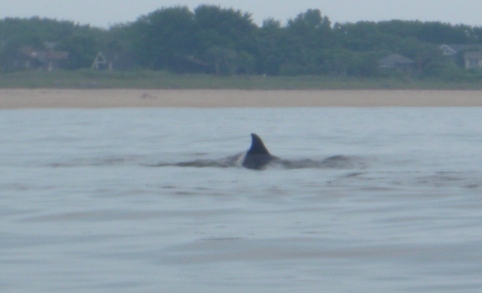
Just a few hours ago a pod of dolphins snorted just a few feet from our kayaks.

Nowhere in the preamble does Achieve.org speak of the wonders of this natural world, of the joys of discovery, of our human need to lift up stones to see what lives underneath.

If I do my job well, that is, if I teach a child science, she will scoff at the premises Achieve.org holds as sacrosanct. If I do it really well, she will scoff at any premises I hold sacrosanct.


Is there no joy in Mudville?
Photo by Leslie--looks like a shot of Nessie, true, but we were both too excited to take a straight shot.

Slow science

"[I]t is quite the rushing through and pointing at.... "
A wise woman's words upon reviewing Newark's 2nd grade science curriculum


If you spend most of your time doing things you like, there is no reason to do things quickly. I like slow. Deep, thoughtful living takes time.

Slow gardening. Slow teaching. Slow clamming. Slow cooking. Slow down.


The Framework For Science Education will be released in the next week or so. It is currently "undergoing a confidential external review by a group of independent experts," but given the track record of Achieve, I doubt much will be changed. And that's a shame.

There's a whole lot of "rushing through and pointing at."
***

We keep confusing attainment of benchmarks based on science content with learning science. The persistence of the flawed concept of  a STEM (Science/Technology/Engineering/Mathematics) curriculum shows how little science is understood.

Science is making sense of the natural world by telling stories using specific rules. Models, hypotheses, theories, simulations--all stories dependent on observations of the natural world, the world perceived by our senses, the dancing shadows in Plato's cave.

The heart of science, what separates it from other forms of story-telling, is its reliance on observation. Each and every one of us can see the shadows dancing on the cave wall, and each can challenge the stories of another, by pointing to the wall. Even children. Maybe especially children.

We underestimate the power of naming, a real danger in our early grade science curriculum. I hold sophomores spellbound describing the mysterious force savallah. a mysterious force recognized by my ancestors in western Ireland. I might even light a candle as I tell the story. I explicitly describe what gravity does, but call it "savallah." Every particle of matter tugs at every other particle that exists.


Not one student believe savallah exists. Not one. But they all "believe in" gravity.

Young children do not need to "know" gravity--the word should be banned before high school. They do not need to know engineering. They do not need to know algebra.

They need to practice observing until they trust their perceptions enough to challenge the misconceptions of others.

***

I spent last evening on the ferry jetty. I saw an eel swim languidly by, rising from the depths, as the gray clouds started spitting on the water, an eel perhaps never seen by a human. The world is far larger than we can imagine.

Learning science is not linear--children need not (and, at any rate, cannot) grasp STEM concepts in carefully chunked modules divided by grades. If a child learns how to observe, truly observe, she can tackle most of the standards proposed in the late elementary grades in less than a month in high school.


If she also learns how to think, truly think, she can tackle pretty much anything. Anything. Content in science becomes old news because it will always remain an incomplete story. We teach it anyway, superficially, and we test it anyway, superficially. Efficiently, cheaply, and superficially.

We don't need children who can recite the stories, we need children who can write them.

In the end, technology will not save us, nor will engineering. Seems the height of insanity to trust the methods that got us into this mess.

What will save us is a generation of children who learn how to observe, to tell stories, to know enough about this marvelous world to love it, and to care for it.


Science isn't intuitive--if it were, we'd still be ruled by a slew of false gods.
Because we do not teach it well, we are still, alas, ruled by a slew of false gods.

Photos ours, use as you will--two of Galway Bay, one from Delaware.

Monday, May 16, 2011

Arne's abominable approach to science

Students sing, clap, and dance about solids, liquids and gases. They learned the solar system through song. It's just one example of how having clear standards for students drives innovation in a school. 


Arne really doesn't get science, but he's got a pocketful of money, so his words carry some weight. I wiled away a perfectly good morning reviewing science terms for our state's test, time better spent doing science.

I've got no beef with children singing or clapping or dancing. I'd like to encourage more of this, pursuit of happiness and all that. (Jefferson was no dope.) But it's not science.

How clear standards drives this kind of nonsense escapes me--I'm still naive enough to expect a modicum of cogency from our national  leaders.
***

Memorizing the planets is not science. Knowing that the planets are lit by the sun is not science. Spouting off that the sun converts hydrogen to helium is not science.
Instead of memorizing planets, follow one for a few weeks, or even a few months--watch how it wanders around against the background of stars. If you "know" that planets revolve around the sun just because someone told you that, you're not fit to be a citizen in this great experiment called America..

Instead of knowing that planets are lit by the sun, take a peek at Venus. Watch its phases for a year or two. Galileo did this over 400 years ago using a crappy telescope. Or look at a ring's shadow cast on Saturn.If you don't have that kind of patience, you're not fit to be a citizen in this great experiment called America.

Instead of claiming you know anything about the composition of the sun, learn about spectroscopy. Helium was discovered on the sun decades before it was found on Earth. I can say this in class, and kids will write it down, and no one challenges me. If you don't have that kind of skepticism, you're not fit to be a citizen in this great experiment called America.
Arne doesn't care if you're a fit citizen. He wants you to better the economy, to go work for one of the many transnational corporations that would cringe at our Constitution if we dared make it matter again.


If all of us who teach remembered why we teach, for whom we work, and why we're "public," Arne would be as potent  as Bumble the Abominable Snowman after Hermey's dental work.

If a child needs a song and dance routine to learn science, it's probably not.


You can listen to a few songs for free if you click on the album cover.
Arne managed to cheapen both science and art in one speech.

Friday, May 13, 2011

Just to see stuff...

I wasted a day today prepping my lambs for the New Jersey Biology Competency Test. I will waste another day on Monday.

I have no idea what it means to be competent in biology, and judging by the practice questions, I am not alone. If a child passes the biology competency test, is she a biologist?

I chased a herd of daphnia today in one of my tanks--we have about 10 in the room. A child from another class came to visit today, just to see stuff.

We have a generation of children who do not see stuff. We have a generation of adults who do not see stuff. We can't even blame the gods-we've gone done outsourced hubris.
***


In a couple of weeks I will lead almost 200 kids on a trip to Sandy Hook. We will hold fiddler crabs and grass shrimp and pipefish and horseshoe crabs. We will get too much sun, and a few of us will lose some red blood cells. Children will watch the tide fall--we cannot stay long enough to watch it rise again.

We will hunt for hermit crabs and whelks and killies and mussels.

The children will see that the world is for them, of them, and that it is, ultimately, incomprehensible. Science is, to paraphrase Richard Feynman, understanding how nature behaves. The "why" I leave to the priests, the astrologers, the charlatans--grasping the how is more than enough for a thousand lifetimes.

And what, really, will help a larval human "get" science? Prepping for a test given to meet the demands of a few aged men sitting in fancy buildings just over a couple hundred miles away? Or walking along Sandy Hook Bay in early June?


A shame I even need to pose the question. A bloody shame....


Thursday, April 14, 2011

Unintended consequences: King Ludd was right

Natural science has a funny way of bumping up against high tech. While we are way past the point of  rationally discussing whether we'd be better off without automobiles, industrialized agriculture, or Auto-Tune (I'd vote against all three), not all high tech gadgets are irreversibly entrenched in our culture.


King Ludd--waiting for rain to wash his hands
 
Hands-free sinks have always annoyed me--I like being able to alter the water temperature, and I have a bad habit of setting my papers down on the sink's edge, with predictable consequences. They make sense, though--less touching, more sanitary. The last thing a hand touches before turning on a bathroom sink may be a less-than-pristine orifice.

Hospitals have spent oodles of dollars installing the sinks for this reason. Nosocomial (hospital-acquired) infections are a huge expense, and despite occasional evidence to the contrary, hospitals want their patients to get better.

Alas, turns out the money may be wasted. A Johns Hopkins study shows that automatic faucets may increase risks of nosocomial infections; the fancy valves used in the high-tech sinks serve as breeding grounds for Legionella bacteria.

As a result, "hospital leadership elected to use traditional fixtures – some 1,080 of them – in all patient care areas in the new clinical buildings currently under construction at Johns Hopkins’ East Baltimore campus." Yep, they're removing the high-tech fancy doo-dad sinks and replacing them with, ahem, traditional fixtures.

How many high-tech devices in the classroom truly improve education? 


Maybe if they look at the morbidity from cars, they'll consider removing the parking lots, too.

Wednesday, April 6, 2011

Trust me, I'm a science teacher

Am I going to teach the history of science?
Am I going to teach science as a seemingly static list of what we know today?
Am I going to teach science as a seemingly static list of what we know when the textbook was published?
Or am I going to teach the process of looking at the world with our God given senses (and yes, "God" is an incomprehensible word), looking for patterns, testing predictions, and expanding what we know?


If you do not "get" science, please step out of the way.
If you are not in awe of the universe, or humbled by its very possibility, please get off the stage.
If you think science can be learned from a monitor, please move over.
If you confuse technology with science, please get off the curriculum committee.

Science is not defined by school boards, governors, or even Presidents. It leads to where it leads--unpredictably but consistently.

I have two goals in class--to teach science, and to preserve a child's wonder. When they become contradictory, something is very wrong....


Ain't xkcd just grand?
And maybe I'm just too old, but "bitches" sounds misogynous....

Saturday, April 2, 2011

Cheap tools for kindergarten (Part 5a)

Thou shalt not make unto thee any graven image, or any likeness of any thing that is in heaven above, or that is in the earth beneath, or that is in the water under the earth: Thou shalt not bow down thyself to them, nor serve them: for I the Lord thy God am a jealous God, visiting the iniquity of the fathers upon the children unto the third and fourth generation of them that hate me; And shewing mercy unto thousands of them that love me, and keep my commandments.
Exodus 20:4-6

Whatever one's view of the Hebrew Bible may be, the words that survived countless generations of people who carried them likely reflects a sort of cultural wisdom. Just like the Bill of Rights, many people vehemently defend the Ten (or so) Commandments without having a clear understanding of what they are defending and in many cases, without having ever actually read them.)

Words and ideas, concepts that separate us from most of the other beasts, have both honed our views of the universe while separating us from the natural world. Sin is defined as turning away from God. We need a word for turning away from our natural history.
***

Notebooks, done right, make the visible world more so.


"Done right" does not mean a table of contents, or neat (and colorful) drawings, or proper tabs, or 1" margins, or a whole lot of other things you'll find on rubrics. If the point is clarifying the world to the very young journalist, then the rest is piffle. (Yes, there is a point to organizing "thoughts" and there is a point to legibility and there is a point to following directions--but that's not the point of an observer's notebook....)

Piffle kills learning, and has no place in public education. Before diving into the power and simplicity of having children create notebooks detailing their personal excursions into the natural world, I want to lay out their dangers.


Notebooks change a child's perception of the world, as they do ours. Language both describes and defines what we perceive. We ignore this, of course, most of the time, and most of the time, this is fine. (Well, maybe not so fine given our cultural madness where we pay more attention to imaginary stock indices than the natural world.)

Some powerful things happen when we scribble:
Our words and our pictures create models of what's "out there," but can never (with the exception of mathematical models of natural laws) truly convey what we see. The first couple billion years (or so) of our ancestors had no reason to doubt what they perceived, they did not play the role of Creator. We now define our worlds. Our words, our images, have become our universe.

Our words and our pictures assume an immediacy and power that beguile us; we mistake the words for what they represent. In schools we pledge allegiances to flags, "study" polar bears in magazines, pretend that concepts like "global community" exist.

The physical manifestations of our words--textbooks, worksheets, notebooks--become identified with learning. We grade notebooks, judge their worth by their heft, and ritually toss them out when the school year ends.


Just as teachers who have little grasp of what "matter" or "energy" mean should not teach science, teachers who have little grasp of how language influences our perceptions should not use science journals.

I'd rather teach adolescents who have never been exposed to any formal science training at all than teach those who carry deep misconceptions sown through years of schooling.

***


The National Science Teachers Association promotes the use of notebooks in the early grades, and they should be an integral part of any science education, even before a child can write, if we insist on teaching the young science.

I hope to develop a series of posts that encourage rabid debate on what it means to teach science, what it means to learn science, in the early grades, focusing on how we encourage children to learn about the natural world, through their eyes and ears, their Pacinian corpuscles, their taste buds, their noses.

I think it requires keeping journals, as I will share, but I also think much of what passes for journals needs to be tossed into the heap of inkwells and filmstrips littering our public school junkyards. I hope you join the discussion.

Saturday, March 26, 2011

Cheap "science" tools for kindergarten (Part 1)

Blank thermometer:

No numbers, no calibration marks, just a blank thermometer--essentially a thermoscope. A child can follow changes in temperature by watching the fluid rise and fall.

Everybody alive today was born into a world with calibrated thermometers--they're so obvious as to seem intuitive. Thermoscopes were invented long before Celsius and Fahrenheit got their names attached to them.


The thermoscope itself poses interesting questions. Why does the fluid inside change shape? How fast can you make it rise and fall? Does it always go down when things get colder? (A brilliant child might even ponder what it means to say "colder.")

Over time, children will get familiar with patterns. Ask a child if something is warmer (or colder) than something else. Is today warmer than yesterday?

At some point a child might think to put a mark on the thermoscope, maybe using a piece of tape, to compare one reading with another.

Eventually, of course, the thermoscope becomes more useful with its suit of numbers. Until a child needs the numbers, though, I suspect they just get in the way.


A blank balance:

My first chemistry set came with a super cheap plastic balance with tiny tin pans. A pointer indicated when the the two pans were level, but it couldn't measure anything, all it could do is compare.

The "all it can do" liability taught me more than a Ohaus Adventurer Pro AV64 Analytical Balance ever could--it was also about $1600 cheaper.

All any scale does is compare masses--a cheap balance just makes it more obvious what you're comparing. The fancy scale is comparing numbers based on a slab of platininum-iridium alloy sitting in Paris somewhere, slowly losing mass to entropy and time.


My cheap balance did not need a numerical reference. Either something had more (or less) mass than something else. It measured the relative pull of gravity of each item, nothing I would have understood when in kindergarten, and nothing I truly understand now.

Which is, of course, the point.

When we use unimaginably fine scales to measure (and the mass of 0.1 mg, the limit of the Ohaus scale, is truly unimaginable), we are dealing with an abstract precision that, at some level, detracts from our understanding of the world.

A child could learn more comparing a bowling ball and a duck using a large, simple balance than she appears to know when she reads 12.1213 grams on the Ohaus scale. She might sound smarter reading the fancy scale, especially in a culture that confounds the abstract with the real, and she might even impress a few administrators and BOE members along the way.

But she won't know a lick more science.


The photo is of the kilogram protoype in Paris.
The old thermometers is from the 1832 Edinburgh Encyclopaedia via  Engines of Our Ingenuity

Diving into early elementary science curriculum

I've gotten a tad involved with the kindergarten science curriculum in our district. I know a little bit about science, and a little bit about kids.

Looking at much of the commercial stuff available, a lot of well meaning (and well paid) folks know little about either. It's time to put these well meaning folks who make a lot of money somewhere else. Maybe Mars

There's a lot of awful stuff out there. It's eye-catching, and well produced, and quite entertaining, but it's awful. Really awful.

Energy and matter are very difficult concepts to master. It's OK if a 6 year old doesn't know much about Newton's Laws. What is not OK is teaching nonsense that will make it more difficult for the child to grasp science later.

Here's something from PearsonEducaton, written for 1st grade:


Where's the science?

I start each year with a classroom of sophomores who think energy means to move something. By the time I get them, this misconception is seared into millions of neuronal connections. Teaching crap is worse than teaching nothing at all.

(The gratuitous "Go Green" symbol on a page feigning science about one of the most ecologically destructive
inventions ever might, though, make a good lesson on irony. Or cynicism.)

I will be posting a variety of seemingly simple ideas for teaching young'uns some science. The goal is not to produce Junior Scientists® rattling off the scientific names of obscure penguins like some unfortunate child with Asperger's syndrome. I just want to help kids see the natural world.


I do not have a particular beef with Pearson--it came up first when I Googled elementary science instructional materials.
If you look at other companies, there seems to be equal opportunity awfulness.