Sunday, September 23, 2012

September beans

September always knocks me for a loop.


When beans were perfect back in July, each one smooth and vibrant, dense with life, we had too many to eat in a day, a week, a month.

July beans eaten fresh off the vine defy words. Moments after I eat one, I can no longer remember the intensity of its taste, so I eat another, then another, munching away until my belly's full of beans. The early summer sun's excess light feeds us all in July, even as we sensed its loss--the days were already getting shorter.

The sun is dying now. September shadows now stalk the beans, and I become aware of what I live to forget.

Autumn beans are far from perfect--I think of the gnarly, sun-spotted fingers of old folk as I pick from the nearly bare vines, prickly with the short stems of perfect beans, long picked, long eaten. Each bean now has a story to tell, the blemishes evidence of its brief, precarious life.

I notice my fingers as I pick, creased and scarred as the beans, which surprises me.

The taste of fall beans does not overwhelm--I can remember their taste hours later, and I have no urge to gorge on the few we harvested today. No one celebrates the taste of fading September beans.

The beans have less heft now, but they taste good enough. The gnarled, dry husk guards the still sweet dampness inside, and the imperfect taste, each bean not quite the same as the next, makes the few on the plate worth eating.

While picking today, I spotted the blush of an impossibly pink tiny flower low to the ground, sitting in a patch of autumn light and I imagined the bean it once could be.

I doubt there's enough light anymore for the flower to become much of anything, never mind a bean, but I doubt a lot of things.

Come November I will find the last one or two beans on the near leafless vine--leathery, barely edible. My fingers will still look younger than the November beans, at least for now.


Happy autumnal equinox!

Wednesday, September 19, 2012

Planting seeds

Fall is coming on in just a few days.
The dying light is crushing, but the apples are divine....

If you're after getting the honey
Then you don't go killing all the bees.

Joe Strummer

I walk barefoot pretty much anytime the outside temperature is above 40° Fahrenheit and I'm not in a building. I used to worry about justifying this, but I'm old enough now that past primum non nocere, the joy of the act is enough.

A student brought me an apple yesterday--she picked it from a local orchard, and while I suppose it's unethical to accept gifts from students, especially ones that bring the unearthly, unbound joy an heirloom apple can bring, I ate it anyway.

Such is our story.
***

Joe Strummer wrote about Johnny Appleseed. They're both dead now, but they both still influence me. I hope a child in my class has reason to say the same a few decades from now. Teaching is a serious and joyful business.

Why else do it?


There are many great things about America that get buried in the noise of sycophants fawning for your vote. Johnny Appleseed is one of them. He was kind, he was tough, he loved life, and he was happy. He also happened to walk barefoot.

Johnny Appleseed was a primitive Christian, the kind who ignored the Constantinian corruption and whose image was, in turn, corrupted by Walt Disney. An apple tree was a "living sermon from God."

And today we've lost both the living sermon and the apple tree. Many, maybe most, of my students have lost the connection between the seed and the sustenance that keeps them alive.

So we plant a lot of seeds in Room B362.

If a few of them happen to be metaphorical, so be it.


I don't want to overstate the case, and that may be impossible anyway, but when we lose our connection to the dirt, we lose everything.
If you happen to be reading this Dave, I could really use a northern spie. Just one will do.


Saturday, September 15, 2012

Not a good enough reason....


"By studying biology you can make informed decisions on issues that impact you and our society."
Modern Biology textbook, HRW, 2006


Pretty much every high school biology textbook uses this claim to justify biology as part of the high school curriculum. This was a load of crap when I was a high school student decades ago, and it's still a bucket of swill.

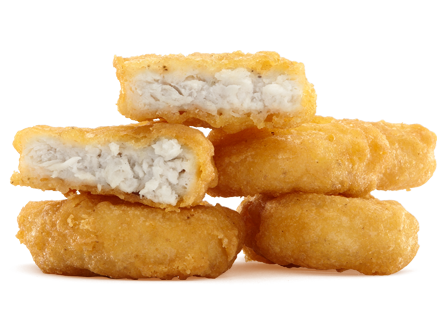
If God Herself came down from the heavens and loudly announced to every lucid American that our current cultural choices are unsustainable--and the overwhelming evidence is that they are--we'd burn a few calories waggling our tongues, then get in our SUVs and drive through McDonald's drive-thrus to pick up dinner.

Photo from McDonald's website--and they still look awful.

American doctors know the stuff of high school biology--yet over 40% stuff their bellies enough to be overweight anyway.

Teachers can no more cure ignorance than doctors can cure obesity.
***

I know my stuff, and I'm getting better each year at sharing it with young adults. But unless I can convince a child biology is worth knowing, I can't charm anyone through the state's end of course exam.

It's a difficult task because knowing biology per se won't fix anything--the wise kids know this. And most kids are wise.

Every student, wise or not, watches the adults in a school building. They need to, there are a lot of bullies and knuckleheads in any adult population, and those in schools wield tremendous power over children. For many students, maybe most, school is simply about surviving.

I'm a reasonably (OK, maybe ridiculously) happy person. A lot of teachers are. A few are miserable, true, but they don't last long in high schools. My happiness may be partly genetic, but a good chunk of it comes from my day to day connection with the muck of life that surrounds us. The world is worth knowing.

My happiness floats around my room like the mesmerizing tune of the Pied Piper, and kids follow. Most do not yet know how richly connected they are to the world, the living world that is so much bigger and complex than any of us can imagine, a world that belongs to them, though few know this...yet.


The point of education is to give a child a chance to pursue happiness. Sounds quaint now, maybe even a bit soft, but it was once considered an "inalienable Right"--ol' Mr. Jefferson himself penned that.

I don't know how much Thomas Jefferson knew about the high school biology of his time, but just about everybody then knew where there food came from and where their crap went. I'd bet very few of them would ever choose to eat a McNugget if they were available. Not because they were told not to, but because a freshly slaughtered bird simply tastes better.

Eating good food makes us happy, reason enough.


Why are we so afraid of happiness....?


Thursday, September 13, 2012

Clamming, teaching, living

It's September, and I'm busy.

For all the clamor and the noise, for the rules and procedures, for the structured universe in a building where the dull hum of fluorescent light replaces the summer sunlight, there remains something very human about caring for a stranger's child.


In a couple of days I will paddle out to a mudflat, and rake up a few dozen clams. A stiff northwest breeze will strip words from my world, and allow me back into the bigger world around us. In a world suffused with artificial light and flavors and relationships, only a privileged few get to dance in the wordless beauty of a tidal flat, where clams sweeter than music await.


I sing a lot in a classroom. I rarely sing on a mudflat. No need to.

Still, the song may be the last vestige of any sense of connection to the world and the Word. Some call it the "real world," seemingly unaware of the irony of the redundancy.

On days I sink ankle-deep into the muck, I have no need to sing.
But on days I find myself trapped indoors, it's the song that keeps me sane.


The kids here me sing, and, confused, they listen. That crazy old man has seen something he wants to share. The world is bigger than all of us.


The heart of the matter comes down to matters of the heart.....

Saturday, September 8, 2012

Hand of God, hand of Darwin


Too often high school biology teachers take the soft way out when confronting challenges in the classroom.

"Science and religion answer different questions."

This is more convenient than true. How humans came to be is a religious question. It's also a science question. Trying to placate a student by insisting otherwise diminishes science, religion, and your student. If you think guiding a child's grasp of the natural world matters, then teach science.

If you think convenience matters more, get out of the classroom.
***

We have Disneyfied Darwin. (To be fair, we have a habit of sanitizing just about all the great thinkers in history.)

Darwin did not come up with the idea of evolution any more than Newton discovered gravity or Columbus proved the world is round.


Darwin's genius, the reason Darwin's ideas are so powerful and frightening, is this: once life was here (for whatever reason),  natural selection is sufficient to explain how humans (or any other organism alive today) came to be.

If natural selection is sufficient, then the Hand of God becomes superfluous. Not wrong, of course, and certainly not falsifiable--the supernaturalists will always have that edge over science--but folks get understandably peeved when the Almighty becomes a footnote.

If you're a 15 year old child with a firm belief in the omnipotence of a creator, and you get even an inkling of the repercussions of Darwin's concept of natural selection, you're going to feel like someone just ripped your world apart.

Because someone just did.
***

So, yes, science doesn't have much to say about whether God's Hand directed the traffic of evolution--it's no longer an interesting scientific question. Most of my students, like the vast majority of adults, do not get this. Heck, most people who "believe in" evolution don't get this, either.

It's easy to hide in this cloud of ignorance, to pretend science and religion serve different masters. I suspect many biology teachers (who, for the most part, are not biologists), do not themselves have a deep understanding of the repercussions of natural selection.

If Darwin was right, humans were not inevitable. That can be profoundly disturbing to a sophomore high school student.


I know it's disturbing to at least one 53 year old science teacher....
Michelangelo drew those hands, of course....


Saturday, September 1, 2012

Guide to gurus

Science is the belief in
the ignorance of experts.

Richard Feynman


A lot of ed gurus make a lot of money doing the circuit. Teaching well is like losing weight--there are no shortcuts, but we keep tossing money at folks who promise us THE WAY.


I'm going to save you a few bucks, and even more important for the mere mortals among us, a lot of time.

If your guru fails to meet these minimal qualifications, put away your wallet. They're wasting your time:
  • Has your guru taught in a real classroom the past three years?
  • Does your guru allow his research to be peer reviewed?
  • Does your guru grasp statistics?
  • Is your guru free from the financial interests of a billionaire?
Bye Wong!
See you later Marzano!
Hasta la vista Duncan!
Arrivederci, Gardner!

If we're even going to pretend we're a profession, we need to stop buying snake oil.


(But make sure you buy my book when it comes out.....)

Biology dies in a classroom

I got a bellyful of clams from our back bay and beans from our garden. what else is there to say?


Today I got my thumb chomped as well as it has been in 4 decades by a blue crab, saw a hummingbird sit on a dead yucca stalk, watched 4 admiral butterflies flutter on a pod of zinnias started from seeds harvested from last year's zinnias, saw a few hundred killies, saw my second favorite bird (an oystercatcher) on a tidal flat, picked about a hundred or so string beans, waded in the Delaware Bay, got bit by (and slaughtered) a dozen or so mosquitoes, paddled a couple of miles, watched diffuse sunlight set on the water,and in a minute will be eating clams harvested by me.


A decent sized bluefish caught by my daughter....

And in four days I start "teaching" biology in a room lit up by fluorescent light, cooled by a compressor, using 21st technology reduced to an interactive white board that made a lot of money for SMART Technologies, but really, when you get down to it, doesn't have much effect on student understanding.

I do what I can--the room already has local critters--sow bugs, centipedes, spiders, millipedes, and will have a lot more in the next few weeks.
***

The natural world blows away anything I can do in the classroom.
The natural world blows away anything I can say to my kids.

To tell a kid she's made of stardust, while true, does little good in a culture that puts corporations over people. Why would a child even believe that in a classroom dominated by fluorescent lights and a Smartboard?

So we plant stuff. A lot.
...eaten before the next high tide.

Students expect their beans to germinate, flower, and fruit in less time than it takes to complete a round of WoW. But that's OK, in the end, they get a bean pod or two, for nothing more than a little care.

We have a generation of children who receive accolades less rewarding than a simple bean pod--in the end, the beans win.
***

I am a government agent charged with teaching biology--and that's exactly what I plan to do.

If your child leaves my classroom hungry for real food, for wisdom, for life, I've done my job.


P.S.: I am going to tell your lamb she is going to die. This should not be news to children.